
Where Does My Donation Go When I Give to a Local Dog Rescue Nonprofit?


A local dog rescue nonprofit donation pays for intake, kennel care, washing, veterinary needs, training, behavior support, adoption preparation, transportation, and youth programs. At K9 4 KIDS, your donation helps large rescue dogs move from stress and uncertainty toward safety, structure, and adoption readiness in San Martin, South County, the South Bay Area, and San Benito County.
A donation is not a vague gift. It is fuel for a working rescue system. It keeps dogs clean, fed, trained, and emotionally stable long enough for the right family to find them. It also supports youth who learn responsibility, patience, and calm leadership through supervised interaction with rescue dogs.
Why Local Dog Rescue Donations Matter More Than Most People Realize
Local rescue work happens one dog at a time. A dog comes in scared, dirty, underfed, untrained, injured, overstimulated, or shut down. Before adoption is possible, someone has to provide food, housing, cleaning, handling, structure, and safety. This is where your donation starts working.
National animal charities play a role, but local giving stays closer to the animals, youth, volunteers, and families in your own region. For K9 4 KIDS, this means dogs and youth connected to San Martin, Morgan Hill, Gilroy, San Jose, Hollister, and nearby South County communities.
The strongest way to judge a donation is to follow the work. Intake leads to daily care. Daily care leads to decompression. Decompression creates room for training. Training supports adoption readiness. For K9 4 KIDS, this process also creates safe teaching moments for youth who need structure, confidence, and connection.
What Does My Money Pay For When I Donate To A Dog Rescue?
Your money pays for practical rescue needs. Food, bowls, collars, leashes, crates, bedding, cleaning supplies, kennel upkeep, washing, medication, transportation, vaccines, exams, and training time all cost money.
Why Is A Local Donation Different From A National Donation?
A local donation supports animals and people close to home. It helps a nonprofit respond to regional needs, local surrender pressure, big dog adoption delays, and community youth programs.
Your Donation Starts With Rescue Intake And Safe Daily Care
Rescue intake is the first safety checkpoint. Staff or trained volunteers need to assess the dog’s condition, behavior, stress level, handling tolerance, and immediate needs. A dog might need food, water, rest, parasite treatment, washing, leash work, or medical attention before anyone begins adoption planning.
Large rescue dogs often need extra care during intake. A strong dog with poor leash manners is not bad. He is unprepared. A nervous big dog in a kennel is not hopeless. He needs time, space, calm handling, and consistent routines. Those needs require resources.
Daily care includes feeding schedules, water checks, kennel cleaning, waste removal, bedding changes, controlled movement, observation notes, and safe human interaction. Without clean kennels, predictable feeding, and steady routines, behavior gets worse. With structure, dogs begin to settle.
K9 4 KIDS explains its local nonprofit mission through the connection between rescue dogs and youth programs. This mission works only when daily operations are stable enough to support both sides.
Why Intake Costs Begin Before A Dog Is Adoptable
Many costs arrive before an adoption photo exists. Intake supplies, cleaning, transport, food, bedding, flea control, records, vaccinations, and safe housing all happen first.
Why Big Dogs Often Need More Space, Food, And Handling Time
Big dogs need larger kennels, stronger collars, sturdier leashes, more food, more controlled exercise, and more careful adoption matching. Donations help fund the time and tools needed to guide the dog safely.
Food, Kennels, Washing, And Veterinary Support Protect The Dog’s Health
Daily care is health care. Clean kennels reduce odor, stress, parasites, contamination, and disease risk. Fresh water supports digestion and recovery. Proper feeding supports weight, energy, coat health, and training focus. Washing removes dirt, odor, allergens, and surface irritation.
The ASPCA shelter statistics show many animals enter shelters as strays or owner surrenders. Dogs arriving from unstable situations often need more than a bowl of food. They need a predictable environment where their nervous system has room to settle.
Veterinary care is one of the hardest costs to predict. A dog might arrive healthy, or the dog might need vaccines, medication, wound care, parasite treatment, dental work, spay or neuter support, pain management, or emergency care. Rescue organizations need flexible funds because they do not always know the need at intake.
The HumanePro rescue funding guidance explains rescue group funds commonly support veterinary bills, food, utilities, transport, staffing, spay and neuter, and daily operating needs. Adoption fees help, but they rarely cover the full path from rescue to placement.
How Clean Kennels Reduce Stress And Disease Risk
A clean kennel protects the dog’s respiratory health, paw health, coat condition, sleep quality, and stress level. Good rescue care uses repeatable cleaning routines, safe disinfectants, dry bedding, and regular inspection.
Why Flexible Donations Matter More Than Restricted Gifts
Restricted gifts help when they match the current need. Flexible donations let the rescue respond to the most urgent problem first. This might be vet care this week and kennel supplies next week.
Training Turns A Rescue Dog Into An Adoptable Dog
Safety is not the finish line. A dog also needs adoption readiness. Training helps a rescue dog learn leash manners, calm greetings, impulse control, crate comfort, body handling, and basic cues. For big dogs, this step matters even more because size magnifies normal behavior. Jumping, pulling, barking, or spinning in excitement scares people faster when the dog is large.
K9 4 KIDS focuses on dogs who need more than a quick listing. Through its big dog rescue program, the organization works with dogs who need structure, patience, and better adoption preparation.
A common rescue guideline is the Three-Three-Three Rule. It describes how some dogs need roughly three days to decompress, three weeks to learn routines, and three months to settle into deeper trust. It is not a scientific formula, but it is a useful handling reminder. Dogs need time before people judge their true personality.
Training also protects adopters. A dog who walks better on leash, accepts handling, settles after excitement, and responds to basic direction is easier to place. Donations help pay for the time and consistency needed to build those skills.
Why Rescue Dogs Need Decompression Before Training Works
A stressed dog does not learn well. Decompression lowers fear, confusion, and survival behavior. Once the dog settles, handlers get a clearer picture of temperament, triggers, strengths, and training needs.
How Structure Helps Big Dogs Show Their Real Personality
Structure gives a big dog a fair shot. Predictable routines, calm leash work, controlled greetings, and reward-based training help adopters see the dog’s potential instead of only the dog’s stress.
How Donations Support Youth-Canine Rehabilitation
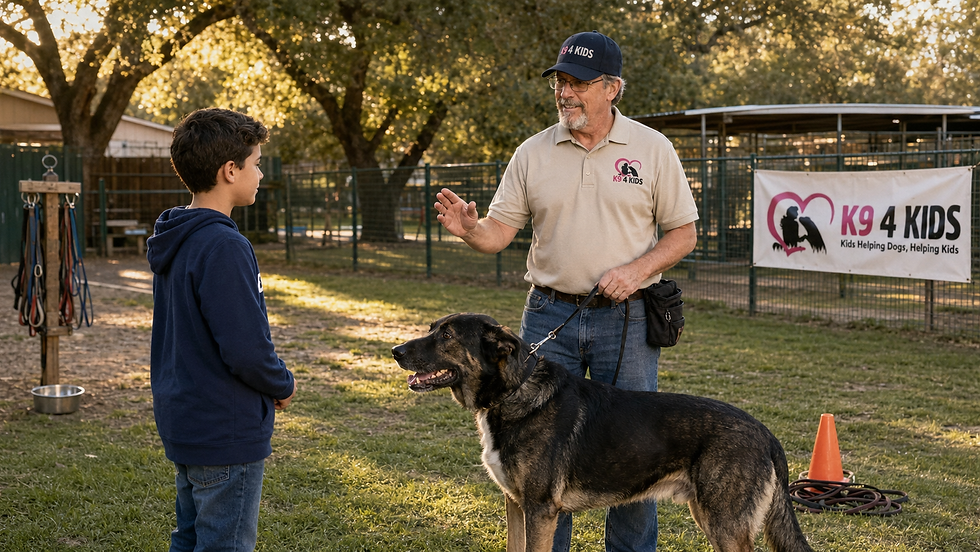
This is where K9 4 KIDS stands apart. The work is not only rescue. It is also structured youth development through safe, supervised dog interaction. A young person who learns to walk, groom, cue, or calmly sit with a rescue dog is learning more than animal care. They are practicing patience, responsibility, emotional control, and trust.
The challenged youth program gives the mission a second layer of impact. A donation supports dogs who need people and youth who benefit from meaningful responsibility.
Both sides need structure. Both sides need calm. Both sides need a safe environment.
Research on animal-assisted intervention has examined how youth programs involving animals relate to social support, behavior, and emotional development. One youth-focused study available through NIH and PubMed Central gives useful context for the human side of this work.
The goal is not random play. Good youth-canine programming requires supervision, clear roles, safe handling rules, body-language awareness, and age-appropriate responsibility. A youth might help fill water, brush a calm dog, practice leash walking with guidance, or observe canine body signals.
How Do Dog Rescue Programs Help Challenged Or Troubled Youth?
They give youth structured tasks with real consequences. The dog responds to calm energy, patience, and consistency. Youth learn to slow down, follow direction, read behavior, and earn trust.
Why Calm Handling Helps Both The Youth And The Dog
Calm handling teaches the dog people are predictable. It teaches the youth their choices affect another living being. This shared learning is the heart of the program.
How Local Giving Helps South County, San Martin, Gilroy, Morgan Hill, And San Benito County

Local animal welfare has local pressure points. South County has rural roads, large properties, working families, stray concerns, owner surrenders, and big dogs who need the right environment. San Martin sits in a practical location between Morgan Hill, Gilroy, San Jose, Hollister, and San Benito County. This regional position matters.
A local rescue nonprofit works with real local dogs, local adopters, local youth, local volunteers, and local donors. The Shelter Animals Count 2025 report shows shelter intake remains a major national issue, with millions of dogs and cats entering the system. K9 4 KIDS brings the broad issue down to a local level where support has visible impact.
Donating locally also builds accountability. You are not sending money into a faceless system. You are supporting a named program with a defined service area and a mission tied to dogs and youth.
Is It Better To Donate Money Or Supplies To A Local Dog Rescue?
Both help. Money is usually more flexible. Supplies help when they match current needs. The best gift depends on what the rescue needs right now. Food, towels, bedding, cleaning products, and equipment are useful only when they match the dogs and facility.
How Do I Know If A Dog Rescue Nonprofit Is Trustworthy?
Look for a clear mission, local service area, active programs, real contact paths, visible animal care, adoption focus, youth program details, and practical explanations of how donations help. If you want to support the mission but are not sure where to start, contact K9 4 KIDS and ask what the organization needs most.
A donation to K9 4 KIDS supports more than survival. It helps create the conditions for change. A big dog gets care, structure, and training. A young person gets responsibility, mentorship, and a safe way to build confidence. A family gets a better-prepared dog. The local community gets a stronger rescue resource.
Frequently Asked Questions
Where does my money go when I donate to a dog rescue?
Your donation usually supports food, kennel care, washing, vet care, medication, cleaning supplies, training, transportation, adoption preparation, and daily operating needs. At a local nonprofit, those dollars often support specific dogs and programs in your region.
How do local dog rescues use donations?
Local rescues use donations for intake, housing, feeding, sanitation, medical care, behavior support, training, and adoption preparation. Some rescues also use donations for community programs, volunteer coordination, and youth-focused education.
Are donations to dog rescue nonprofits tax-deductible?
Donations to a qualified 501(c)(3) nonprofit are often tax-deductible. Donors should confirm the nonprofit’s status and keep receipts for tax records. For personal tax advice, speak with a qualified tax professional.
Why do big dogs cost more to rescue and rehome?
Big dogs often need more food, larger kennels, stronger equipment, longer training, and careful adoption matching. Their size makes normal stress behaviors look more serious, so they often need extra structure before placement.
How do dog rescue programs help challenged or troubled youth?
Youth-dog programs give young people structured ways to practice responsibility, patience, calm communication, empathy, and trust. Under supervision, youth learn how their actions affect another living being, while rescue dogs gain safe human interaction.

Comments