
Teaching Consent: How to Teach Kids to Ask "Can I Pet?

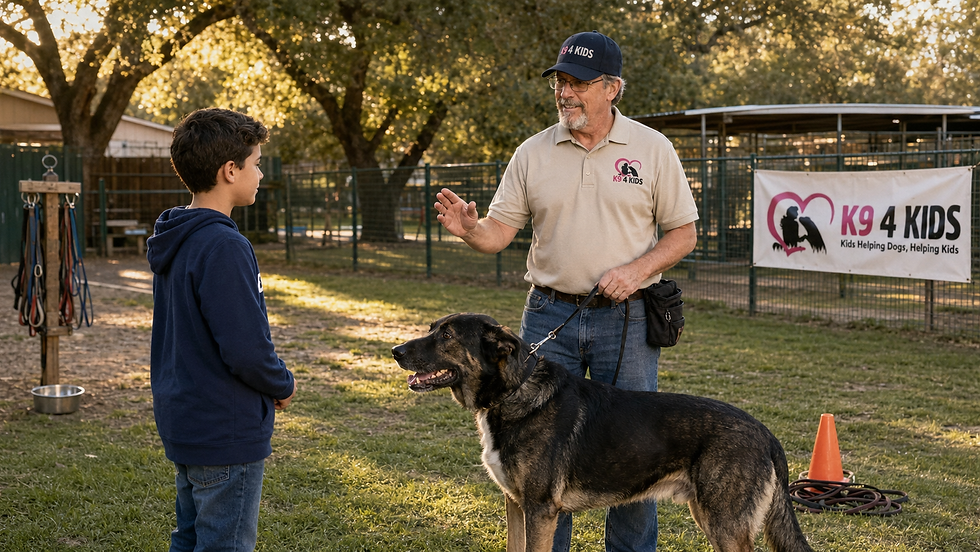
Dog safety for kids starts before a child reaches for a collar, a soft ear, or a wagging tail. The first lesson is simple: ask the person, then ask the dog. The pause protects children, protects dogs, and builds respect.
At K9 4 KIDS, this lesson fits the heart of the work. The San Martin nonprofit serves South County, the South Bay Area, and San Benito County through dog rescue, training, kennels, rehabilitated adoptions, and youth programs. The mission is not only placement. It is safer, kinder human-dog relationships.
The phrase “Can I pet?” sounds small. It is not small. It teaches a child to stop, ask, observe, and accept an answer. Those are safety skills. They are also life skills.
Why “Can I Pet?” Is a Safety Lesson and Teaching Consent Lesson
Children often believe a wagging tail means yes. Adults often believe the same thing. The mistake creates risk. A dog might wag from stress, conflict, curiosity, or high arousal. A dog might stand still because it is calm, or because it is frozen and worried. Safe petting begins when a child learns not to guess.
The “Can I pet?” lesson gives a child a process. The child asks the handler first. Then the child watches the dog. If the dog moves closer with a loose body and soft expression, the interaction might proceed. If the dog backs away, turns its head, stiffens, hides, licks its lips, or freezes, the answer is no.
The American Veterinary Medical Association reports millions of people are bitten by dogs each year in the United States, with children making up a large share of bite injuries. Children should not fear dogs. They need rules clear enough to repeat.
The “Ask the Owner, Ask the Dog” Rule
Teaching Consent: The best rule is direct: ask the owner, then ask the dog. Most children are taught only the first half. The first half alone is not enough. A handler might say yes because the dog is usually friendly. The dog still might feel crowded, tired, sore, overstimulated, or unsure in the moment.
First, the child asks, “Can I pet your dog?” The answer belongs to the handler. If the answer is no, the child steps back and moves on. No begging. No bargaining. No sneaking in one quick touch.
Second, the child asks the dog with body language. The child stands still, keeps hands close, turns slightly sideways, and waits. The dog should have room to move closer or move away. A child should not bend over the dog, reach toward the face, block an exit, or crowd the dog near a wall, fence, car, crate, doorway, or kennel run.
The AKC safe greeting guide supports this idea: ask permission, then let the dog decide by approaching. Families often miss the second step.
How Kids Should Approach a Dog Safely
A safe approach has four parts: slow feet, quiet voice, still hands, and space. Those rules work at parks, sidewalks, family parties, adoption events, school pickups, and rescue facilities.
A child should walk, not run. Running toward a dog creates pressure. High-pitched yelling often adds more pressure. A child should stop several feet away and ask the handler first. If the handler says yes, the child waits for the dog to come closer.
Many kids are told to put out a hand for the dog to sniff. This advice needs care. A hand shoved toward a nervous dog is still pressure. A better version is this: keep the hand low and still near the child’s own body, then let the dog choose whether to investigate. The child should not push fingers toward the dog’s nose.
If the dog approaches with relaxed movement, the child pets gently on the chest, shoulder, side, or back. The child avoids the top of the head, face, ears, paws, tail, and belly unless a trained handler gives clear direction. No hugging. No kissing. No climbing on the dog.
What a Dog’s “Yes” and “No” Look Like
Dog body language is a safety tool. Parents, teachers, youth mentors, and volunteers should teach it in plain words. A dog’s yes is not one signal. It is a group of relaxed signals.
A dog showing possible comfort often has a loose body, soft eyes, normal breathing, a relaxed mouth, curved movement, and a choice to move closer. The dog might lean in gently or stay near the child after the first touch. Even then, the child should keep the interaction short.
The three-second pet test is a strong training habit. The child pets for three seconds, then stops. If the dog stays relaxed or moves closer, the child pets again. If the dog turns away, steps back, freezes, looks away, or leaves, petting ends.
A dog’s no often starts small. Watch for lip licking, yawning, whale eye, tucked tail, stiff body, pinned ears, paw lift, hiding, backing away, sudden stillness, or head turning. Growling is also communication. Do not punish a growl. Move the child away and give the dog space.
Why Rescue Dogs and Big Dogs Need Extra Space
Rescue dogs are individuals. Some love children. Some need distance. Some need structured introductions before they relax. A dog’s past might include neglect, rough handling, repeated shelter stays, poor socialization, or long periods in loud kennel settings. This does not make the dog bad. The dog needs clear, patient handling.
The first weeks after rescue often involve decompression. The dog is learning new smells, routines, people, sounds, feeding patterns, and sleeping spaces. Too much touch from strangers adds stress.
Large rescue dogs face another burden. They are often judged faster. People see size before they see behavior. Shelter data from Shelter Animals Count showed large dog adoptions dropped in the first half of 2025 while small dog adoptions rose. This trend matters for a South Bay rescue working with big dogs.
The K9 4 KIDS Big Dog Rescue program gives these dogs a better path. Safe public education helps too. When children learn calm greetings, big dogs get fewer unfair reactions and more chances to be understood.
How Youth-Dog Programs Teach Empathy, Patience, and Control
Dog safety education becomes more meaningful when young people practice it with guidance. A dog responds to posture, speed, volume, tension, pressure, and timing. The feedback is immediate. A child who moves slowly and waits often sees a dog soften. A child who rushes often sees the dog pull away.
This is why structured youth-dog work matters. It teaches cause and effect without a lecture. The young person learns to read another living being before acting. The skill supports empathy, patience, responsibility, and emotional control.
K9 4 KIDS connects rescue work with youth development through its challenged youth programs. Activities such as kennel care, washing, leash handling, feeding routines, and supervised training all build responsibility. The dog benefits from cleaner care, calmer interaction, and better handling. The youth benefits from structure, trust, and useful work.
Research hosted by the National Library of Medicine has explored animal-assisted programs with youth, including models where young people learn to manage a dog’s behavior while also managing their own responses.
Why This Matters in San Martin, Morgan Hill, Gilroy, and San Benito County
South County families live around dogs in many settings. Children meet dogs at parks, ranch properties, sidewalks, sports fields, school pickup areas, family gatherings, rescue events, and neighborhood walks. Some dogs are family pets. Some are working dogs. Some are recent rescues. Some are nervous, injured, old, protective, or still learning.
Local dog safety education should reflect this reality. A child in Morgan Hill or Gilroy needs more than a generic rule from a national website. Families need practical language for real places: do not reach through fences, do not pet dogs in truck beds, do not surprise dogs near livestock areas, do not crowd dogs at events, and do not touch a dog without a handler present.
K9 4 KIDS is rooted in this region. The organization’s mission and background connect dog rescue, training, youth development, and community service. This gives the topic local weight. Teaching kids how to ask “Can I pet?” is about more than one interaction. It builds a safer culture around rescue dogs and young people.
Dog Bite Prevention Rules Every Parent Should Teach
Parents do not need to turn dog safety into fear. The goal is calm confidence. Children should know when petting is allowed, when it is not allowed, and how to stop before a dog feels trapped.
Teach these rules until they become automatic:
Ask the owner before touching any dog
Wait for the dog to approach
Keep your voice quiet
Move slowly
Pet the chest, shoulder, side, or back
Stop after three seconds and check the dog’s response
Leave the dog alone if it walks away
Never hug, chase, grab, ride, tease, or corner a dog
Never bother a dog while it is eating, sleeping, hurt, hiding, behind a fence, in a vehicle, or caring for puppies
Never touch a service dog without permission
The CDC dog safety guidance reminds families to supervise young children around dogs, including dogs they know. Supervision is not standing nearby while looking at a phone. It means watching the child and the dog.
Parents should model the same rules. If an adult reaches over a dog’s head, pulls a dog close, or ignores stress signals, the child learns unsafe habits.
Help Kids Build Safer, Kinder Relationships With Dogs

Teaching children to ask “Can I pet?” protects both sides of the leash. It gives children a safety process. It gives dogs the right to space. It gives families a shared rule easy to remember in public.
For rescue dogs, especially large rescue dogs, respectful greetings matter. For youth, the lesson goes beyond dog handling. It teaches patience, empathy, boundaries, and self-control.
K9 4 KIDS works at this exact intersection: rescue dogs, training, youth development, and community service. If your family, school group, youth program, or community organization wants to support safer dog interaction in South County, this is a practical place to begin.
Ask the person. Ask the dog. Respect the answer. When families repeat this rule, children learn safe habits before stress turns into real risk.
To learn more, support the work, ask about programs, or get involved, contact K9 4 KIDS.
Frequently Asked Questions
How should a child ask to pet a dog?
A child should ask the owner first by saying, “Can I pet your dog?” If the owner says yes, the child should stand still and let the dog approach. The child should stay calm, avoid the dog’s face, and pet gently only if the dog appears relaxed.
What should kids do if a dog does not want to be petted?
Kids should step back and leave the dog alone. A dog walking away, hiding, turning its head, freezing, or backing up is saying no. Respecting this answer prevents stress and helps children learn safe, kind behavior.
What are signs a dog is uncomfortable around children?
Common warning signs include lip licking, yawning, whale eye, tucked tail, pinned ears, stiff posture, hiding, backing away, growling, or sudden stillness. When a child sees those signals, petting should stop and the dog should get space.
Why should kids ask the owner before petting a dog?
The owner or handler knows the dog’s history, health, training level, and comfort with children. Asking first prevents unsafe surprises. It also teaches children touching a dog is never automatic.
How do you teach kids dog bite prevention?
Teach a repeatable process: ask first, wait, watch the dog’s body, pet gently, stop after three seconds, and accept no. Children should also learn never to bother dogs while they eat, sleep, hide, heal, or care for puppies.


Comments