
Understanding Canine Body Language: Tips for Youth


Reading and understanding canine body language helps you stay safe, build trust, and enjoy better time with dogs. This guide gives youth clear signals to watch for, step by step greeting tips, and rescue-focused advice. You also get links to K9 4 KIDS programs in San Martin that support youth and rescue dogs, including youth and canine training, big dog rescue, dog kennel options, and dog washing resources.
Understanding Canine Body Language and Why It Matters
Youth who learn dog signals avoid common risks and build stronger bonds. Studies link positive youth dog interaction with higher empathy and lower problem behaviors. Training environments for challenged youth also report better communication skills and calmer behavior during structured sessions. This section frames the goal for parents, teachers, mentors, and teens who want safe, confident, and respectful contact with dogs.
The link between youth dog interaction and positive outcomes
Multiple reviews describe gains in social communication and emotional regulation when youth work with dogs. Programs with clear safety rules and supervised handling report stronger outcomes. Youth develop awareness, patience, and follow-through during training tasks and daily care. See this overview on dog-assisted benefits in children with autism for context Frontiers study.
Risks when signals are misread
Misreading signals leads to avoidable incidents. For example, a snarling dog is sometimes mistaken as friendly. Staring at a tense dog, hugging a new dog, or crowding a resting dog leads to stress or defensive behavior. Youth who learn early to scan the whole body, not only the tail, reduce risk fast. See this summary of misinterpretation risks in children NCBI research.
Basics of Canine Communication: What a Dog’s Body Is Telling You
A dog communicates with the whole body. You will read posture, tail, ears, eyes, mouth, and movement together. Context matters, for example, a wag without a loose body signals uncertainty, not joy. Rescue settings often add history and arousal, so handlers teach youth to move slow and ask for space. For a visual primer, review this guide from Guide Dogs UK.
Posture, tail, ears, eyes, mouth
Relaxed: loose body, soft eyes, neutral tail, mouth slightly open, easy movement.
Tense: stiff body, closed mouth, tail high or tucked, ears pinned or sharply forward, short fast movements.
Mixed: conflicted signals such as wagging with a stiff body, lip licking, or “whale eye.”
Why rescue dogs show mixed signals
Rescue dogs often carry stress from change, transport, or past neglect. Signals shift quickly during intake and early training. Youth should pause before contact, ask a handler, and let the dog approach first. Patience earns trust. Learn how large breed rescue work fits into this picture on our big dog rescue program.
Signs of a Happy, Relaxed Dog
Friendly greeting cues
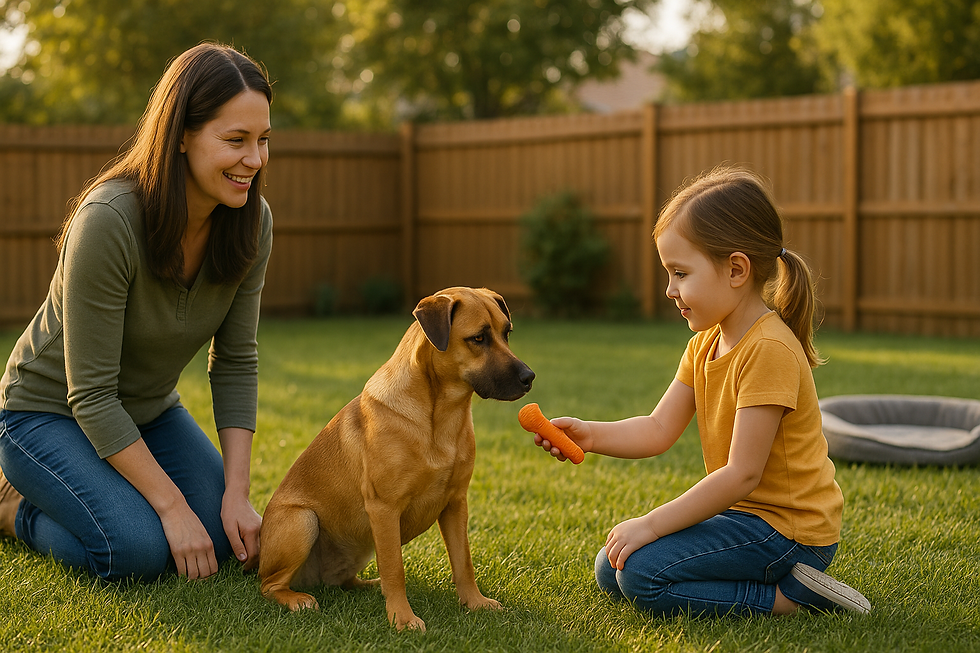
Look for soft eyes, a wiggly body, a neutral to mid tail that moves the hips, loose posture, and a play bow. Breathing looks easy. The dog checks in with the handler and settles fast after short excitement.
How to approach for a safe greeting
Ask the adult or handler first. Turn your side to the dog, keep your eyes soft, hold your hand low for a sniff, then pet the chest or shoulder with short strokes. Stop often and watch for consent signals such as leaning in or re-engaging after you pause.
Signs of a Stressed or Anxious Dog
Common stress signals youth miss
Lip licking, yawning when not tired, pinned ears, whites of the eyes showing, paw lift, slow motion freeze, tail tucked, or hackles raised. A stiff wag with no body wiggle also signals stress. These early cues tell you to back off and give space. For a printable overview, see Dog-Ese, The Language of Dogs county handout.
How to respond when stress shows up
Stop petting, turn your side, take two slow steps back, lower your voice, and give the dog a path away. Ask the handler for next steps. If the dog relaxes, praise quietly. If tension stays high, keep distance and wait for guidance.
When a Dog Feels Scared or Threatened
Warning signs before a bite
Freezing, stiff legs, head low with a hard stare, snarling, growling, teeth showing, or lunging on a short arc. Do not reach toward the head during any of these signals. Movement should slow, and space should increase fast.
Safe exit strategies for youth
Turn your body sideways. Step back with smooth steps. Place a backpack or chair between you and the dog if needed. Avoid running. Call for an adult or handler. Re-set with supervised guidance only.
Special Considerations in Rescue and Youth Programs
Benefits for challenged youth working with dogs
Structured sessions teach clear timing, calm voice, and respectful touch. Youth learn to observe signals, mark desired behavior, and deliver rewards on time. Gains transfer to school, home, and peer settings. Learn about our mission and goals on the about us page.
Why rescue dogs need extra clarity
History shapes behavior. New sounds, new people, and new rules raise arousal. Keep routines simple. Use predictable patterns for greeting, walking, feeding, and crate time. Handlers model slow movements and short training blocks to keep learning positive. Explore youth program details on challenged youth services.
Practical Checklist for Meeting a New Dog
Do’s for youth
Ask permission from the handler first.
Turn your side to the dog, allow a slow approach.
Pet the chest or shoulder, not the face.
Stop often and check for consent signals such as leaning in.
Leave if the dog moves away or shows stress.
Don’ts for youth
Do not hug unknown dogs.
Do not reach over the head without consent signals.
Do not crowd a resting, eating, or sleeping dog.
Do not chase a dog that moves away.
Do not pull tail, ears, or collar.
Simple Skills Youth Learn Fast
The five-second rule for consent
Pet for five seconds, stop, and see what the dog does. If the dog leans in or re-engages, continue. If the dog turns away or licks lips, take a break.
The three-step reset
If tension rises, pause, step back, breathe, and ask for guidance. Short resets protect safety and preserve trust.
Tail Wags Explained for Youth
Loose full-body wag
Hips move, body wiggles, face looks relaxed. This reads friendly and social in context.
High tight wag or low tuck wag
A high tight wag with a stiff body signals arousal or challenge. A low tuck wag with crouch signals fear. Read the whole body, not only the tail.
Eyes, Ears, and Mouth Signals
Soft eyes vs hard stare
Soft eyes blink and look away, a friendly sign. A hard stare holds still and narrows. Back off when you see a hard stare.
Ear position and mouth changes
Pinned ears, closed mouth, and tight corners warn of stress. Neutral ears with a soft open mouth align with relaxed behavior.
Movement Tells the Story
Loose movement vs stiff steps
Loose, bouncy steps and curved approaches align with friendly intent. Stiff, straight movement with direct approach signals tension.
Freeze and slow motion
A sudden freeze or slow motion approach acts as a strong warning. Increase distance and ask for support.
Your Role in Big Dog Rescue Settings
Working safely with large breeds
Use two points of contact for gear as directed by handlers. Keep wider personal space. Focus on early signals, not late ones. Large breeds shift from uncertain to defensive quickly when crowded.
Why predictability matters for large dogs
Consistent greeting routines lower arousal. Quiet voices, slow steps, and short sessions help large dogs settle and learn.
Local Angle, San Martin Youth and Families
Respectful greetings during public events
Farmers markets, school fairs, and adoption days attract families. Teach children to ask first, read the body, and thank the handler. Spread simple rules in your community.
Training, dog washing, and kennel needs
Youth and families often visit programs for training, short kennel stays, and dog washing in San Martin. Staff guide safe greetings before services, during drop off, and at pick up. The same rules apply at home and in the neighborhood.
How to Learn More and Get Involved

K9 4 KIDS supports youth and rescue dogs through hands-on programs and community work. Learn about the mission, volunteer paths, and support options on the website. Reach out through the contact page to ask about sessions, events, or donations.
Conclusion
Reading canine body language gives youth clear rules for safety and trust. Start with posture, tail, ears, eyes, and mouth, then confirm with movement. Use consent checks, slow steps, and short resets. In rescue settings, keep routines simple and predictable. Families in San Martin who follow these habits build safer, happier time with dogs, at home and during K9 4 KIDS events.
FAQ
How do you teach a child to read a dog’s body language?
Start with relaxed vs tense. Add tail, ears, eyes, and mouth. Practice with short supervised sessions. Pause often and check for consent signals such as leaning in. Use simple checklists and repeat in calm settings before busy events.
What are the warning signs a dog is about to bite?
Freezing, stiff legs, hard stare, snarling, growling, teeth showing, or a lunge on a short arc. Step back, turn your side, and create space. Ask an adult or handler for help before any new contact.
What does a tail wag mean?
A loose full-body wag with a soft face reads friendly. A high tight wag with a stiff body signals arousal or challenge. A low tuck wag with crouch signals fear. Read the whole body each time.
Why learn canine body language at a rescue event?
Rescue events introduce new sights and sounds for dogs. Early signals such as lip licking or a freeze tell you to slow down and give space. Youth who learn these skills keep sessions safe and help dogs settle faster.
What should you do if a dog stiffens during petting?
Stop, turn your side, take two slow steps back, and give the dog a path away. Ask the handler for next steps. Wait for relaxed signals before you continue petting.


Comments