
Why Do Some Youth Respond Better to Animals Than Adults?


Some young people struggle with direct adult conversation. Questions feel intrusive. Eye contact feels demanding. Advice arrives before trust. A dog changes the interaction. The youth gets a task, a living partner, and immediate feedback without explaining every feeling first.
For families exploring animal-assisted programs for youth, K9 4 KIDS takes a clear position. Structured work with rescue dogs offers some challenged youth a practical route into responsibility, communication, patience, and calm leadership. Dogs do not replace parents, counselors, teachers, or licensed mental-health professionals.
The work also serves the dog. Training, kennel care, washing, handling, and adoption preparation move rescue dogs closer to stable homes.
Why Some Youth Respond Better to Animals Than Adults
A conversation with an adult often requires words first. A young person is asked what happened, how they feel, or what they plan to do differently. For youth carrying distrust, anxiety, anger, or repeated conflict with adults, direct questioning creates pressure before trust exists.
A dog changes the starting point. The first task might be clipping on a leash, waiting outside a kennel, offering a simple cue, brushing a coat, or walking ten controlled steps. Attention shifts away from self-disclosure and toward a shared job.
Research into canine-assisted psychotherapy for adolescents has reported promising findings involving engagement, socialization, and disruptive behavior, while researchers also stress limitations in study size and design. The responsible conclusion is narrower. Structured interaction with a dog gives some youth a lower-pressure route into participation. A systematic review available through PubMed Central supports this cautious framing.
Why Do Some Teenagers Trust Animals More Than People?
Trust often grows through predictable experiences. So why do Youth Respond Better to Animals Than Adults? A dog does not require a polished explanation before the activity starts. The youth observes body language, changes handling, repeats a cue, and watches the result. Progress becomes visible.
At K9 4 KIDS, the stronger lesson is not “the dog understands everything.” The lesson is simple. Clear behavior receives clear feedback. Consistency matters. Calm handling matters. Repetition matters.
How Rescue Dog Training Gives Youth Immediate Feedback
Dog training turns broad ideas such as patience and self-control into observable behavior. Consider a kennel exit. The youth approaches the gate while a large dog is excited. Opening the gate during jumping or surging rewards the wrong pattern. The handler waits for four paws on the floor, opens the gate a few inches, pauses if excitement rises, then tries again.
This is threshold control. It supports a calm kennel exit and gives the youth a concrete reason to slow down. The same principle applies to loose-leash handling. Constant pulling creates opposition and confusion. A cleaner routine uses position, timing, direction changes, reinforcement, and pressure release to reward the behavior the handler wants.
Positive reinforcement demands observation. Rewards must follow desired behavior closely enough for the dog to connect action and outcome. K9 4 KIDS describes its youth work around positive reinforcement, dog body language, proper handling, patience, and consistency.
The K9 4 KIDS Youth Programs place this work inside a supervised rescue setting rather than presenting dog contact as entertainment.
What Progress Looks Like During a Training Session
Progress is not a perfect sit in a quiet room. A stronger measure is recovery after stimulation. If a dog barks, pulls, jumps, or becomes over-aroused, an experienced handler watches what happens next. Does the dog reconnect with the handler, take food politely, respond to a familiar cue, and settle back into walking?
Youth progress deserves the same practical view. Frustration does not erase progress. Recognizing frustration, resetting, changing the approach, and trying again shows a useful skill in action.
Why Big Rescue Dogs Need More Than Basic Shelter Space
Large dogs face practical adoption barriers tied to housing, transportation, handling confidence, exercise expectations, and rental restrictions. Shelter Animals Count reported stronger dog adoption rates overall in 2025, while its reporting continues to identify capacity pressure and longer stays as important shelter issues, especially for large dogs. Shelter Animals Count reported a 57 percent dog adoption rate in 2025, up from 55 percent in 2024.
For a large dog, adoption readiness is built through small repetitions. Loose-leash walking matters because pulling from a 70-pound dog carries more force than pulling from a 15-pound dog. Threshold control, neutral passing, food-taking manners, sit-wait-release patterns, grooming tolerance, crate settling, and recovery after excitement all shape adopter confidence.
The K9 4 KIDS Big Dog Rescue connects this rehabilitation work with the nonprofit’s focus on dogs needing added preparation before placement.
The 3-3-3 Rescue Adjustment Guideline
Rescuers often use the 3-3-3 guideline to explain adjustment after adoption. The first three days center on decompression. The first three weeks bring routine and clearer behavior patterns. The first three months often bring deeper familiarity and trust.
Treat it as a practical rescue guideline, not medical science and not a promise. Individual dogs adjust on different schedules. A newly placed dog still needs predictable feeding, rest, controlled introductions, safe handling, and time away from unnecessary stimulation.
Kennel Hygiene, Washing, and Daily Care Affect Adoption Readiness
Behavior work gets attention, but clean housing and routine care form part of rehabilitation. A dog living in an unsanitary enclosure faces added health risk, discomfort, odor, coat problems, and a poor presentation to adopters.
Professional shelter sanitation separates cleaning from disinfection. Organic material, feces, hair, food residue, and dirt are removed first. Disinfectant follows at the correct dilution and contact time. ASPCA Pro recommends spot cleaning when the same animal remains in an enclosure and deeper cleaning between occupants, with procedures designed to reduce unnecessary handling and stress. Its shelter guidance also recommends keeping animals away from cleaning and disinfecting products during use. ASPCA Pro shelter sanitation guidance explains this two-stage approach.
Dog washing serves a purpose beyond appearance. Low-arousal handling around water, towels, feet, ears, and brushing gives staff information about touch tolerance while improving hygiene. Safe footing, comfortable water temperature, appropriate pet products, clean towels, and sanitized equipment support a controlled wash routine.
For youth, these routines teach a different form of responsibility. Rescue work includes repetitive care even when nobody is watching.
Why San Martin Matters to the South County Rescue Pipeline
K9 4 KIDS operates in San Martin, between Morgan Hill and Gilroy, with direct relevance to South County, the broader South Bay, and nearby San Benito County. This location is not a generic SEO label. County of Santa Clara Animal Services also operates from San Martin and provides sheltering services for Morgan Hill and Gilroy. Its mission includes sheltering homeless animals, reuniting lost pets, facilitating adoption, and investigating cruelty and neglect. County of Santa Clara Animal Services provides the local government context.
A local rescue works inside this regional flow of intake, foster, training, adoption, and placement. K9 4 KIDS adds a distinct piece. Rescue dogs receive adoption preparation while challenged youth participate in structured canine work.
The K9 4 KIDS mission centers on this dual focus, and the K9 4 KIDS home page gives families, adopters, volunteers, and supporters a direct starting point.
For residents in Morgan Hill, Gilroy, San Martin, South County, and San Benito County, local engagement also makes the work easier to see. People are closer to the kennel, the program, the dogs, and the staff performing the daily work.
Where Local Rescue Donations Go and Why Traceability Matters
National animal charities serve important roles. Large organizations fund research, public education, disaster response, advocacy, grants, and programs operating across many communities. A small rescue serves a different scale. Its work often sits closer to the donor.
At kennel level, money supports food, cleaning supplies, disinfectants, laundry, grooming materials, veterinary care, transportation, leashes, crates, training equipment, facility upkeep, and program costs.
K9 4 KIDS currently publishes examples of giving levels on its site, including $25 for food and treats for a rescue dog for one week, $75 for grooming and a wellness check for a new rescue, $250 for a dog-training program involving one at-risk youth, and $500 tied to bringing a dog into the program from euthanasia risk. These are K9 4 KIDS’ published donation examples, not an audited statement showing how every unrestricted dollar is allocated.
Donors evaluating any nonprofit should also check tax-exempt status and public filings. The IRS Tax Exempt Organization Search provides status, eligibility, and filing information.
Local giving is not automatically superior to national giving. It is often more traceable for a donor whose priority is a specific community, kennel, dog population, or youth program.
What a Youth Experiences at K9 4 KIDS
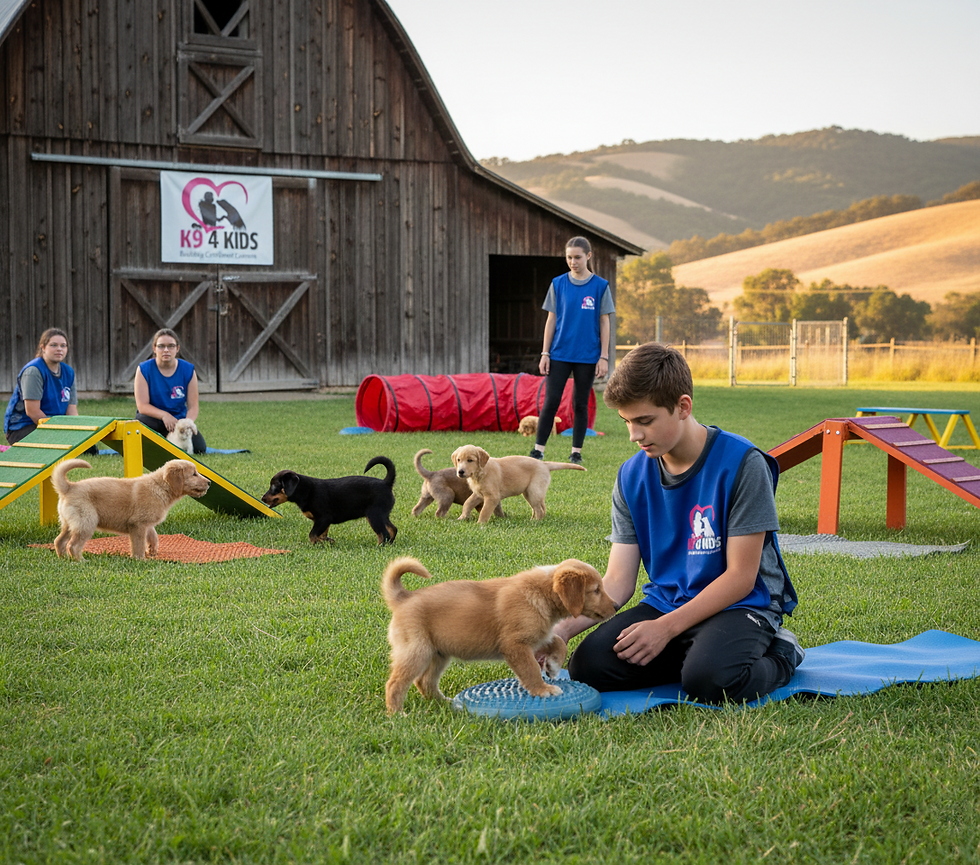
A youth does not need to arrive as a dog trainer. The useful starting point is structure.
First comes safe approach and handling. Staff establish where the youth stands, how the leash is held, when the kennel gate opens, and what dog body language deserves attention. The youth learns one task rather than receiving ten instructions at once.
Next comes repetition. A loose-leash exercise might involve short movement, a direction change, reward placement, and reset. A grooming session might focus on calm contact around the shoulders and back before moving toward more sensitive areas. A wash routine might involve controlled entry, secure footing, low-arousal handling, rinsing, drying, and equipment cleanup.
The mentorship value sits inside the work. The youth receives instruction, performs the task, sees the dog’s response, receives correction, and repeats.
The youth is not positioned only as a person receiving help. The youth has responsibility for helping another living being become easier to handle and better prepared for adoption.
Families, counselors, referral partners, volunteers, adopters, and donors interested in fit, supervision, participation requirements, or program availability should contact K9 4 KIDS directly.
Frequently Asked Questions
Is it better to donate to a local rescue or a national animal charity?
Neither choice is automatically better. National organizations work at a scale suited to research, policy, disaster response, grants, and public education. Local rescues keep support closer to a defined community and specific animal population. If your priority is seeing a direct connection between your gift, local kennel work, rescue dogs, and youth programming, a local organization offers stronger proximity. Review mission, tax status, financial reporting, and program results before giving.
What does a small dog rescue use donations for?
Typical rescue expenses include food, veterinary care, cleaning and sanitation supplies, laundry, grooming, transportation, crates, leashes, collars, training equipment, facility maintenance, insurance, and program operations. Spending varies by organization. Donors should rely on published financial information rather than assuming every gift pays for one named item.
Why do large rescue dogs need more support?
Large dogs often require more food, stronger handling skills, larger equipment, suitable housing, and focused work on leash manners, greetings, thresholds, and settling. Their size also narrows some adopter and rental options. Better handling and adoption preparation reduce avoidable friction when a prospective home meets the dog.
Do rescue dog programs help challenged youth?
Research on animal-assisted services reports promising outcomes involving engagement, social-emotional functioning, stress, and some behavioral measures. Results differ across programs and individuals. A structured rescue-dog program adds practical work involving responsibility, communication, repetition, and calm handling. It should not be described as a substitute for licensed mental-health care.
Does donating locally help reduce shelter pressure?
Local rescue support contributes to capacity outside municipal shelters through intake, foster care, rehabilitation, training, veterinary care, and adoption placement. The exact effect depends on each rescue’s operations and partnerships. In South County, supporting credible organizations involved in rescue and placement adds resources to the regional animal-welfare network.


Comments