
Why Do Large Breed Dogs Stay in Shelters Longer Than Small Dogs?


Why do large dogs stay in shelters longer? Size can narrow the pool of homes that are immediately able, willing, and prepared to adopt them. Housing rules, handling concerns, cost, lifestyle fit, and the way an excited large dog appears in a kennel can all slow the matching process.
Current national shelter data shows the difference clearly. In 2025, the median time from intake to adoption was 17 days for large dogs, compared with 14 days for medium dogs and 10 days for small dogs. Yet large and small dogs both had a 54% adoption rate relative to intake. In this dataset, large dogs were classified as 61 pounds and up.
Large dogs are not automatically less adoptable. They often need more time to reach the right home.
For rescues, those extra days also mean more feeding, cleaning, handling, enrichment, observation, and kennel space while the dog waits.
Large Dogs Often Have a Smaller Pool of Immediately Suitable Adopters
A large dog may attract attention from potential adopters and still have fewer realistic placement options. The issue is often not whether someone likes the dog. It is whether their housing, household, physical ability, schedule, and budget make adoption possible.
Housing Restrictions Can Eliminate Potential Homes Early
Rental housing can be one of the first barriers. Some landlords, property managers, homeowners associations, or insurance policies place limits on dog size, weight, or breed.
A peer-reviewed U.S. study examined 19,514 potentially adoptable dogs from 17 shelters. Researchers found that small and medium dogs initially had higher adoption hazards than large dogs. They identified housing weight restrictions and the perceived ease of caring for smaller dogs as possible explanations for the difference.
That means an adopter can genuinely want a large dog and still be unable to take one home. Adoption speed should not be confused with the quality of the dog.
Space and Lifestyle Questions Matter, but Size Is Only Part of the Picture
Potential adopters often ask whether they have enough room for a large dog. That is reasonable, but square footage alone does not determine whether a dog will fit a household.
Energy level, age, exercise needs, training, medical needs, ability to settle, and individual temperament can matter just as much as body size. A calmer large adult may be easier for one household to manage than a smaller dog with very high activity needs.
The better question is, "Can my household consistently meet this particular dog's needs?"
The Practical Cost and Handling Commitment Can Slow Large Dog Adoption
Adopting any dog creates an ongoing financial and practical responsibility. With large dogs, some of those requirements can become more noticeable.
Some Everyday Costs Can Increase With Dog Size
Larger dogs usually consume more food than smaller dogs. They may also require larger crates, beds, harnesses, and other appropriately sized equipment. Some veterinary medications are dosed according to weight, which can affect cost.
That does not mean every large dog costs more overall. Medical conditions, age, grooming, and other needs can outweigh size. Still, prospective adopters may reasonably consider whether the long-term commitment fits their budget.
Physical Strength Changes the Handling Equation
An excited 70-pound dog and an excited 15-pound dog may both jump, pull, bark, or rush toward a door. The behavior can be similar. The physical consequences are not.
Adopters may therefore pay closer attention to leash manners, jumping, door behavior, response to handling, and the dog's ability to settle.
This is not evidence that large dogs are more aggressive or less trainable. Size simply makes handling skills more important. A strong dog that pulls hard can be difficult for an older adopter or someone with limited mobility even when the dog is social and friendly.
A responsible match considers both the dog and the person holding the leash.
What You See in a Kennel May Not Show You the Whole Dog
One of the biggest mistakes potential adopters can make is assuming that behavior behind a kennel door tells the entire story.
Shelters are unfamiliar, highly stimulating environments. Dogs may hear barking, smell unfamiliar animals, see constant movement, and experience repeated periods of excitement and waiting.
Kennel Behavior Can Affect First Impressions
A large dog that barks, jumps, spins, or pulls toward the kennel door can appear more intimidating simply because the dog is larger.
That first impression may influence an adopter before the dog ever gets a chance to walk outside, interact with a handler, or settle in a quieter setting.
Kennel behavior should still be observed carefully. It simply should not be treated as a complete behavioral diagnosis.
The ASPCA reports that dogs, especially large dogs, are staying in shelters longer than they were five years ago, and that extended stays contribute to capacity pressure across the shelter system.
Time Outside the Kennel Can Provide Better Information
Controlled leash walks, routine handling, enrichment, training sessions, and time in lower-stimulation environments can help rescuers learn more about how a dog responds in different situations.
A dog that appears highly excited when someone approaches a kennel may settle after a walk. Another dog may look calm behind the gate but show handling challenges once outside. Neither situation can be understood from a brief glance.
At K9 4 KIDS, thoughtful large-dog rescue work is not about making every dog fit every home. It is about learning enough about the dog to support safer, more realistic matching. Learn more about the K9 4 KIDS Big Dog Rescue program.
Longer Shelter Stays Require More Than an Open Kennel
When a large dog waits longer for adoption, the impact extends beyond that dog's timeline. Every additional day requires care, labor, supplies, and physical space.
Daily Care Continues Until the Dog Leaves
Responsible rescue care can include food and fresh water, kennel cleaning and sanitation, safe kennel exits and returns, leash handling, exercise, enrichment, observation, routine training, and veterinary attention when needed.
Shelter Animals Count reports that large dogs had the longest median time to adoption among dog size categories in 2025, even though their median stay improved from 19 days in 2024 to 17 days in 2025. Small dogs improved from 11 days to 10 days during the same period.
Those extra days accumulate across a facility. Multiple dogs experiencing the same delay can affect staffing, kennel availability, intake capacity, and the amount of individual attention available.
Training Can Help Rescues Understand Adoption Readiness
Training in a rescue setting is not about creating a perfectly behaved dog before adoption.
Basic leash work, calm transitions, response to cues, routine handling, and predictable expectations can help rescuers see how the dog learns and what support may be needed in a home.
Adopters can then ask better questions. Does the dog pull strongly on leash? What happens when the dog gets excited? Can the dog settle after activity? Are there situations that require additional management or professional training?
The goal is not to eliminate every challenge. It is to reduce guesswork.
Longer Stays Can Affect Rescue Capacity
The operational chain is straightforward.
A slower adoption keeps a kennel occupied longer. Longer kennel occupancy increases the total amount of daily care needed. When enough kennels remain occupied, a rescue has less flexibility to help additional dogs.
This is why large-dog adoption is also a shelter-capacity issue.
The Right Match Matters More Than the Fastest Adoption
A quick adoption is not automatically a successful adoption. The better outcome is a placement where the adopter understands the dog's needs and can realistically meet them.
A Longer Wait Is Not a Temperament Score
Potential adopters should not assume that a dog has remained available because something is wrong with the dog.
National 2025 data provides a useful example. Large dogs had a 54% adoption rate relative to intake, the same rate reported for small dogs, even though large dogs had a much longer median time to adoption.
The challenge is often finding the right placement, not proving that the dog is worth adopting.
Questions to Ask Before Adopting a Large Rescue Dog
If you are considering a large dog, ask the rescue what it has actually observed:
How does the dog behave on leash?
What happens when the dog becomes excited?
How does the dog respond to routine handling?
What activity level has been observed?
Can the dog settle after exercise?
What type of household appears most appropriate?
Are there behaviors that may require a trainer, veterinarian, or veterinary behaviorist?
The answers may not be complete, especially when a dog's history is unknown. They are still more useful than judging the dog by weight, appearance, or a few seconds of kennel behavior.
Adopters should also expect an adjustment period after bringing a rescue dog home. Predictable routines, appropriate decompression, exercise, rest, and clear household expectations can help. If behavior raises safety concerns or goes beyond ordinary transition challenges, professional help should be sought.
Large-Dog Rescue Is a Local Issue in San Martin and South County
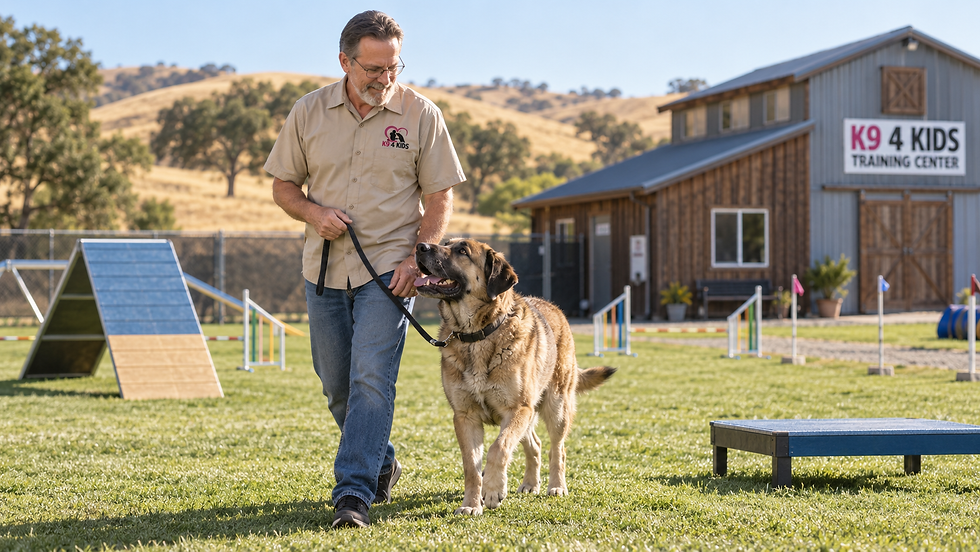
The County of Santa Clara Animal Services Center is located in San Martin and provides sheltering services to Morgan Hill, Gilroy, and Sunnyvale. That makes shelter capacity and dog placement directly relevant to South County communities.
K9 4 KIDS in San Martin also has a mission that includes large-dog rescue. People in Morgan Hill, Gilroy, San Benito County, the South Bay, and surrounding communities can support that work in more than one way.
Adoption may be right for some households. Others may be better positioned to volunteer, foster when opportunities are available, donate, or support the day-to-day work required to care for dogs while they wait. You can also learn more about K9 4 KIDS and its mission before deciding how you want to help.
Why Do Large Breed Dogs Stay in Shelters Longer Than Small Dogs?
Large breed dogs often stay in shelters longer because several practical barriers can stack up at the same time. Housing restrictions can reduce the number of eligible homes. Their size and strength can make some adopters less confident about handling. Ownership costs may require more planning. Kennel excitement can also create a stronger first impression when the dog is large.
None of those factors means a large dog is a poor adoption candidate.
The 2025 national data tells a more useful story. Large dogs waited longer than small dogs, but their adoption rate relative to intake was the same. The challenge is often finding the right placement, not whether the dog can eventually find one.
If you are considering a large rescue dog, evaluate the individual dog, ask detailed questions, and think realistically about your household. If adoption is not right for you, supporting K9 4 KIDS' large-dog rescue work can still help dogs receive the care, training, and time they need while they wait for appropriate homes. You can contact K9 4 KIDS to learn how to get involved.
Frequently Asked Questions
Do large dogs really stay in shelters longer than small dogs?
National 2025 data from Shelter Animals Count showed a median time to adoption of 17 days for large dogs compared with 10 days for small dogs. Individual shelters and dogs vary, so that national pattern should not be treated as a rule for every case.
Why are large dogs harder to adopt?
Large dogs can face a smaller pool of eligible adopters because of housing restrictions, handling concerns, cost, lifestyle fit, and adopter confidence. Research has identified dog size as one factor associated with shelter adoption patterns, while also showing that the effect can change with time in the shelter.
Does a longer shelter stay mean a large dog has behavioral problems?
No. Length of stay is not a behavioral diagnosis or temperament score. A dog may wait longer because of housing limitations, size, adopter preferences, or matching requirements rather than a specific behavior problem.
Can a large dog live successfully in a smaller home?
Possibly. Suitability depends on the individual dog's energy level, exercise needs, training, ability to settle, and the household's ability to provide appropriate care, not square footage alone.
How can I help large dogs if I cannot adopt one?
Depending on what a rescue offers, you may be able to foster, volunteer, donate, share adoptable dogs responsibly, or support supplies and daily care. Contact the rescue directly to find out which forms of help are currently useful.


Comments