
What Does It Cost to Rehabilitate One Large Rescue Dog Before Adoption?


A rescue dog rehabilitation cost rarely stops at food, vaccines, and a bath. Published rescue budgets place basic preparation for a relatively healthy dog around $800 to $1,500 or more. A large dog needing extended medical treatment, kennel care, behavior work, or a longer stay often requires several thousand dollars before adoption.
At K9 4 KIDS, rehabilitation means preparing a dog for life outside the kennel. Veterinary care matters, but so do sanitation, nutrition, calm handling, decompression, leash work, threshold control, and repeated observation around people and other dogs. The goal is not a dog performing tricks. The goal is a dog with a safer, more stable foundation for adoption.
What Is the Typical Rescue Dog Rehabilitation Cost Before Adoption?
No universal price exists because every dog enters rescue with a different history. One arrives healthy and social. Another arrives underweight, frightened, injured, or unfamiliar with basic handling. Those differences change the financial picture quickly.
Published rescue estimates give a useful benchmark. Big Love Animal Rescue lists common expenses such as intake exams, diagnostics, vaccinations, parasite treatment, flea and tick prevention, microchipping, spay or neuter surgery, food, and supplies. Its published healthy-dog range totals about $830 to $1,535 before complex medical needs enter the picture.
A dog with injuries, disease, severe anxiety, or an extended rehabilitation period creates a much higher total. The adoption fee often recovers only part of the investment.
How Much Does It Cost to Rehabilitate a Rescue Dog?
For a relatively healthy dog, a reasonable published benchmark sits around $800 to $1,500 or more. Dogs requiring surgery, specialty veterinary treatment, prolonged boarding, or intensive behavior work often move into several thousand dollars. K9 4 KIDS should not present those figures as its own average unless internal records support the claim.
Why the Adoption Fee Does Not Tell the Whole Story
An adoption fee reflects one transaction at the end of a much longer process. Rescue organizations absorb expenses before a family ever meets the dog. Food, veterinary work, equipment, cleaning, staff time, volunteer time, transportation, and rehabilitation all happen first.
Where Does the Money Go Before a Large Rescue Dog Goes Home?
People see a dog, an adoption fee, and perhaps a donation page. They rarely see the weeks of repeated work between intake and placement.
Medical preparation often includes a wellness exam, vaccines, parasite control, flea and tick treatment, microchipping, spay or neuter surgery, medications, and follow-up care. Daily kennel operations add food, bowls, bedding, laundry, disinfectants, waste removal, water, grooming supplies, and replacement equipment.
For a large dog, crates are larger, bedding wears harder, food volume rises, and washing takes more time. Kennel sanitation must remain consistent because contamination spreads fast in shared animal environments.
A responsible Big Dog Rescue program also invests in behavior assessment and handling. A dog needs repeated exposure to normal routines before placement decisions become responsible.
What Does a Dog Rescue Pay for Before a Dog Is Adopted?
Costs commonly include veterinary intake, vaccines, parasite treatment, spay or neuter surgery, microchipping, food, kennel cleaning, washing, bedding, enrichment, transportation, handling equipment, behavior work, and adoption matching.
Santa Clara County Animal Services provides a useful local example. Its listed spay and neuter pricing varies by sex and size, with higher pricing for larger female dogs. Size alone changes certain medical costs before training or daily care even begins.
Kennel Hygiene Is Part of Rehabilitation
A clean kennel supports physical health and behavior stability. Sound routines include removing waste promptly, cleaning food and water vessels, laundering contaminated bedding, disinfecting surfaces with animal-safe products, rinsing thoroughly, controlling moisture, and limiting cross-contamination between dogs.
Washing also matters. Low-arousal handling during bathing teaches a dog to tolerate touch, water, towels, restraint, and close human contact without turning the process into a wrestling match.
Why Large Dogs Often Require More Time, Space, and Resources
Large dogs face a placement problem documented well beyond one rescue. Shelter Animals Count reported large-dog adoptions fell 9 percent during the first half of 2025 while small-dog adoptions rose 6 percent. Large dogs represented 29 percent of intake and 26 percent of adoptions during the same reporting period.
Longer stays create recurring expense. Every additional day means food, sanitation, laundry, enrichment, handling, kennel space, and observation. Cost keeps accumulating even without a medical emergency.
Large dogs also require appropriate physical handling. Loose-leash work must account for body weight and momentum. Handlers need stable footing, proper equipment, consistent release of leash pressure, and clear criteria for forward movement.
The ASPCA also reports dogs, especially larger dogs, staying in shelters longer than several years ago. For local rescue groups, longer placement periods put pressure on kennel capacity and operating funds.
Why Are Large Dogs More Expensive to Rescue and Rehome?
Food volume, equipment size, veterinary pricing, kennel space, handling demands, and longer placement periods all contribute. A big dog staying in care longer does not create one large bill. It creates many smaller bills repeated day after day.
Time Is a Rescue Expense
The 2026 Hill's shelter report, using Shelter Animals Count data, listed median 2025 adoption stays of roughly 10 days for small dogs, 14 days for medium dogs, and 17 days for large dogs. More time in care means more resources consumed before placement.
What Does Rehabilitation Look Like Beyond Veterinary Care?
A medically cleared dog is not automatically adoption-ready. Rehabilitation also measures behavior during ordinary routines.
Experienced handlers watch kennel exits, leash response, threshold behavior, food manners, tolerance of touch, reaction to nearby dogs, recovery after excitement, and ability to settle. These details often reveal more about daily livability than a polished sit command.
During a calm kennel exit, the dog waits while the door opens, then leaves under control. Repetition turns calm movement into a familiar routine.
Loose-leash handling follows the same principle. Pressure appears when the dog forges ahead and releases when the dog returns to position. Timing must remain consistent.
What Makes a Rescue Dog Ready for Adoption?
Adoption readiness is built through repeatable behavior. Useful markers include calm exits, manageable leash response, threshold control, appropriate food-taking, tolerance of routine handling, neutral passing near other dogs, and steady recovery after stimulation.
A dog with fewer obedience commands but faster recovery often presents a stronger practical foundation than a dog with impressive commands and poor emotional recovery.
A 2025 peer-reviewed shelter-dog study available through PubMed Central also found body size associated with length of stay in its 120-dog sample. The study does not establish a national average, but it supports careful attention to the relationship between size, behavior, and placement.
How Long Does It Take to Rehabilitate a Rescue Dog?
No responsible timeline fits every dog. The rescue-world 3-3-3 guideline offers a useful framework, not a scientific clock.
The first three days often focus on decompression. The first three weeks focus on routine and adjustment. The first three months often involve deeper trust and settling. Some dogs progress faster. Others need far more time.
Why This Work Matters in San Martin, Morgan Hill, Gilroy, and San Benito County
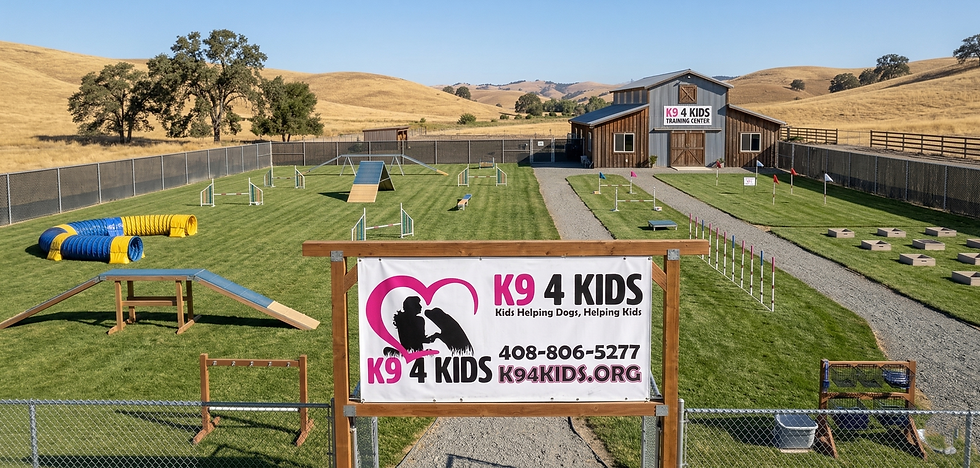
Large-dog rehabilitation is not an abstract national issue for South County. Santa Clara County Animal Services operates in San Martin and handles roughly 4,000 animals each year. County information also identifies German shepherds and huskies as overrepresented and difficult to place.
Across San Martin, Morgan Hill, Gilroy, the South Bay, and neighboring San Benito County, smaller rescues add capacity for dogs needing more time or preparation before placement.
K9 4 KIDS fits into this regional picture through large-dog rescue, kennel care, washing, training, adoption preparation, and youth involvement. Its mission connects animal welfare with structured responsibility rather than treating rescue as a simple intake-and-adopt transaction.
Where a Local Rescue Fits Into the Shelter Pipeline
Public shelters operate at scale. National charities bring fundraising reach, advocacy, disaster response, research, and broad infrastructure. Small local rescues work closer to individual cases.
Neither model needs to be attacked for the other to have value.
Local support often feels more traceable because donors see the kennel, the dogs, the training work, the supplies, and the people doing the daily care. Money stays close to a defined program and a defined group of animals.
For someone deciding between a national organization and a small rescue, the strongest choice depends on the impact they want. National giving supports broad systems. Local giving supports visible work in a specific community.
One Rehabilitated Dog Represents More Than One Adoption
A successful placement begins long before a family signs paperwork. It starts with intake, decompression, medical care, hygiene, nutrition, behavior observation, repeated handling, and careful matching.
The challenged youth program adds structured, supervised interaction. Youth participants practice routine, patience, handling, communication, responsibility, and calm leadership while dogs receive consistent human engagement.
This work should not be presented as clinical treatment without qualified professionals and supporting evidence. The practical value lies in repeated opportunities to practice self-control and responsibility while contributing to adoption preparation.
How Youth-Canine Work Supports Structure and Responsibility
A supervised session needs clear roles. An adult leader sets the task. The youth participant follows handling instructions. The dog receives consistent cues. The session ends before frustration or over-arousal takes over.
Tasks such as filling water bowls, washing a dog, preparing bedding, practicing loose-leash walking, waiting at gates, and rewarding calm behavior create immediate consequences. Rushing produces disorder. Calm repetition produces better handling.
The Client Experience Layer: One Dog, One Journey, One Real Cost
For a donor, adopter, or volunteer, follow one dog's path.
Day one starts with intake and observation. The next stage covers decompression and medical needs. Daily care adds food, sanitation, washing, bedding, enrichment, and human contact. Behavior work builds calm kennel exits, leash control, thresholds, and recovery. Adoption preparation then focuses on household fit, handling, environment, and realistic expectations.
This sequence turns an abstract donation into visible work.
People interested in adoption, volunteering, local support, or learning more about the program should contact K9 4 KIDS. Local engagement gives South County residents a direct way to support dogs moving from intake toward stable adoption.
Frequently Asked Questions
Is It Better to Donate to a Local Rescue or a National Animal Charity?
Both serve useful roles. National charities support broad advocacy, research, disaster response, grant programs, and large-scale animal welfare efforts. Local rescues direct funds toward specific dogs, veterinary bills, food, kennels, training, and daily operations. Choose based on the type of impact you want to support.
What Does a Small Dog Rescue Use Donations For?
A small nonprofit rescue often directs donations toward veterinary care, vaccines, spay or neuter surgery, microchips, medications, food, crates, bedding, cleaning supplies, transportation, washing, enrichment, and behavior work. Longer stays increase those expenses because many costs repeat every day.
Why Do Large Rescue Dogs Need More Support?
Large dogs often require more food, larger equipment, more kennel space, stronger handling skills, and longer placement periods. Some veterinary services also cost more as body size rises. When a big dog remains in care longer, daily food, sanitation, training, and housing expenses continue to accumulate.
Do Rescue Dog Programs Help Challenged Youth?
Structured, supervised dog work gives youth repeated opportunities to practice responsibility, patience, communication, routine, and calm leadership. Those practical benefits should remain separate from medical or mental-health treatment claims. A rescue program should describe what participants practice and experience without promising clinical outcomes.
Does Donating Locally Help Reduce Shelter Pressure?
Local donations support rescue capacity close to the community. Funds directed toward veterinary care, food, sanitation, kennels, training, transportation, and adoption preparation help local organizations care for dogs needing additional time before placement. Effective local rescues complement public shelters rather than replace them.


Comments