
The "Aggressive" Label: Understanding Reactivity vs. Aggression
- Robert Yurosko

- Mar 27
- 7 min read

Society often mislabels loud or defensive shelter dogs as dangerous. This stigma directly fuels the 2026 California pet overpopulation crisis. Southern and Central California municipal facilities report severe overcrowding daily. Large breed euthanasia rates remain critically high across the region. Facilities in San Martin and surrounding areas face unprecedented intake volumes. K9 4 KIDS operates with a clear, dual-purpose mission in the South Bay. We rehabilitate misunderstood large breeds while mentoring local at-risk adolescents. Kennel management requires strict protocols to maintain physical health and mental stability. We implement rigorous kennel hygiene standards to prevent disease transmission. Proper sanitation reduces baseline stress for the animals. You require clear facts to handle behavioral challenges effectively. Our team provides the resources you need to succeed. Visit https://www.k94kids.org/ to view our ongoing operational framework.
Is My Dog Aggressive Or Leash Reactive
Owners often panic when a pet lunges or barks at strangers. You must separate a biological fear response from a true intent to harm. The American Veterinary Medical Association provides clinical guidance on this behavioral divide. Most alarming displays toward humans or other animals represent conflict-induced reactivity. Repeated exposure to frightening stimuli without proper counter-conditioning worsens the behavior. True dominance aggression remains exceptionally rare in domestic pets. Read the clinical data at https://avmajournals.avma.org for detailed veterinary behavioral science. We apply these exact clinical definitions daily in our training yards.
Defining Fear-Based Reactivity In Dogs
Reactivity stems directly from biological fear. A dog trapped on a leash loses the option to flee from a perceived threat. The animal compensates by creating distance through loud vocalizations and sudden lunging. This response is a defensive mechanism. Your pet believes the approaching trigger poses a direct physical threat. The nervous system engages a fight-or-flight response. Confinement on a six-foot leash removes the flight option entirely. The animal chooses to fight. Genetics and early socialization windows dictate baseline confidence. Pups lacking early positive exposure often develop severe behavioral deficits. Shelter environments compound these early deficits. The concrete floors, constant noise, and lack of predictable routine shatter their sense of safety. Fear motivates the noise.
Recognizing Intent To Harm Versus Warning Signs
You must learn to read canine body language accurately. A reactive dog attempts to increase distance from a threat. An aggressive dog attempts to close the distance to inflict damage. The American Society for the Prevention of Cruelty to Animals explains these warning phases clearly. Read their findings at https://www.aspca.org/pet-care/dog-care/common-dog-behavior-issues/aggression. Stiff posture, raised hackles, and vocal warnings indicate discomfort. These actions are requests for space. Predatory behavior involves silent stalking and fixated staring. Address the underlying territorial or protective fear early to prevent an escalation. Ignoring warning signs forces the dog to escalate the defensive response.
Why Does My Dog Bark At Everyone On Walks
A simple walk around your South Bay neighborhood presents numerous sensory challenges for a rescue pet. You view a passing bicycle as harmless. Your dog perceives the identical bicycle as a fast-moving, unpredictable predator. Understanding the mechanics of a walk requires acknowledging the canine perspective. The environment dictates the behavioral response. We observe this dynamic constantly in our San Martin training yards. Your dog reacts to the sum total of environmental stimuli.
Understanding The Canine Threshold Thermometer
The threshold represents the boundary between rational thought and total panic. The UC Davis School of Veterinary Medicine provides essential insights on this cognitive shift. Review their clinical definitions at https://healthtopics.vetmed.ucdavis.edu/health-topics/canine/canine-threshold-thermometer. A dog crossing the threshold loses the ability to process new information. The animal will refuse high-value treats immediately. The pet will ignore familiar obedience cues. Immediate distance from the trigger remains the only effective management tool. You cannot train an animal in a state of panic.
The Hidden Reality Of Trigger Stacking
Trigger stacking explains why a normally calm animal suddenly explodes in panic. Multiple small stressors accumulate over a short period.
Trigger One: The dog hears a garbage truck outside the window.
Trigger Two: A skateboarder passes the driveway during the morning walk.
Trigger Three: A friendly neighborhood dog approaches to sniff. The cortisol levels in the bloodstream stack beyond the canine threshold. The animal reacts violently to the third trigger. The third trigger is not the root cause. The accumulation of stress causes the explosion. We teach our youth handlers to recognize these stacking events early. Preventing the stack prevents the explosion.
(Visual Placeholder: [Infographic demonstrating Canine Trigger Stacking])
How Do You Stop Barrier Frustration In Big Dogs
Large breeds facing spatial confinement often develop severe behavioral issues. Barrier frustration occurs when a dog wants to access a stimulus but faces physical restraint. Fences, windows, and heavy leashes create this barrier. The physical restriction builds intense frustration. This frustration regularly converts into loud barking and fence-running. These behaviors directly contribute to shelter returns across California. Support our specialized housing efforts at https://www.k94kids.org/our-programs/big-dog-rescue.
Local Ordinances And Nuisance Barking In San Benito County
Barrier frustration causes continuous vocalization. San Benito County and the City of Hollister enforce strict animal control ordinances. Neighbors will report nuisance barking to local authorities. Law enforcement officers will issue citations for persistent noise violations. Early behavioral intervention prevents legal complications for your family. Managing the environment stops the noise before complaints occur. Block visual access to busy streets using opaque fencing materials. Bring the dog indoors during high-traffic hours. Use structured crate training protocols to provide a quiet, visually restricted resting area.
Effective Leash Reactive Dog Training Steps
You must implement structured leash reactive dog training protocols. Success requires absolute consistency and precise distance management.
Identify the specific triggers causing the reaction.
Determine the exact distance where the dog notices the trigger but remains calm.
Maintain this safe distance during all outdoor training sessions.
Reward the dog with high-value food when the animal looks at the trigger and remains quiet.
Turn and walk away immediately if the dog begins to fixate or stiffen.
Repeat this process daily to build positive associations.
Upgrade your handling equipment to a front-clip harness for better mechanical control.
What Are The Signs A Dog Is Over Threshold
Identifying an overloaded dog requires careful observation of physical symptoms. The body language changes drastically moments before an outburst.
Dilated pupils and hard staring at the target.
Rapid, shallow panting with a tightly pulled back mouth.
Stiff, rigid body posture with weight shifted forward.
Refusal to accept food or respond to familiar names.
Pacing, spinning, or frantic movements at the end of the leash.
Cortisol Overload And Cognitive Shifts
An intense reaction floods the canine bloodstream with cortisol and adrenaline. The endocrinology behind a reaction is highly complex. The adrenal glands flood the system. Heart rates spike. Respiration becomes shallow and rapid. Digestion halts completely. The physical toll on the animal is immense. You must treat this event as a severe physiological crisis. The physiological stress does not vanish when the trigger walks away. Cortisol remains elevated in the body for up to seventy-two hours following a severe incident. Your dog requires a strict decompression period after an explosive event. Continuous exposure to triggers during this window guarantees further failure. We enforce strict seventy-two-hour quiet periods for newly arrived shelter dogs.
Immediate De-escalation Tactics For Handlers
You must act decisively when your dog goes over threshold. Do not yell or pull aggressively on the equipment. Remaining quiet and calm prevents adding handler stress to the situation. Create distance immediately. Turn the animal around and walk in the opposite direction. Place a physical barrier like a parked car between your dog and the trigger. Seek professional guidance for severe cases. Reach our training staff directly at https://www.k94kids.org/contact to schedule an evaluation.
(Visual Placeholder: [Training Session photo demonstrating distance management])
Are Reactive Dogs Able To Be Cured
South Bay dog owners require realistic behavioral prognoses. You will not find a magical cure for fear-based responses. Training focuses entirely on management and threshold expansion. You teach the animal to tolerate the presence of triggers at closer distances over time. The biological fear response remains part of the animal. You provide the tools to cope with the fear appropriately. Consistent training builds confidence in both the handler and the dog.
Counter-Conditioning And Systematic Desensitization
Veterinary behaviorists rely on two primary psychological protocols. Systematic desensitization involves exposing the dog to a weakened version of the trigger. You start at a distance where the dog feels entirely safe. Counter-conditioning changes the emotional response of the dog. You pair the sight of the scary trigger with a high-value reward. The dog learns the appearance of the trigger predicts the arrival of excellent food. Repetition builds new neural pathways. Read about our structured training methodologies at https://www.k94kids.org/about-us.
How Do Therapy Dogs Help Troubled Youth
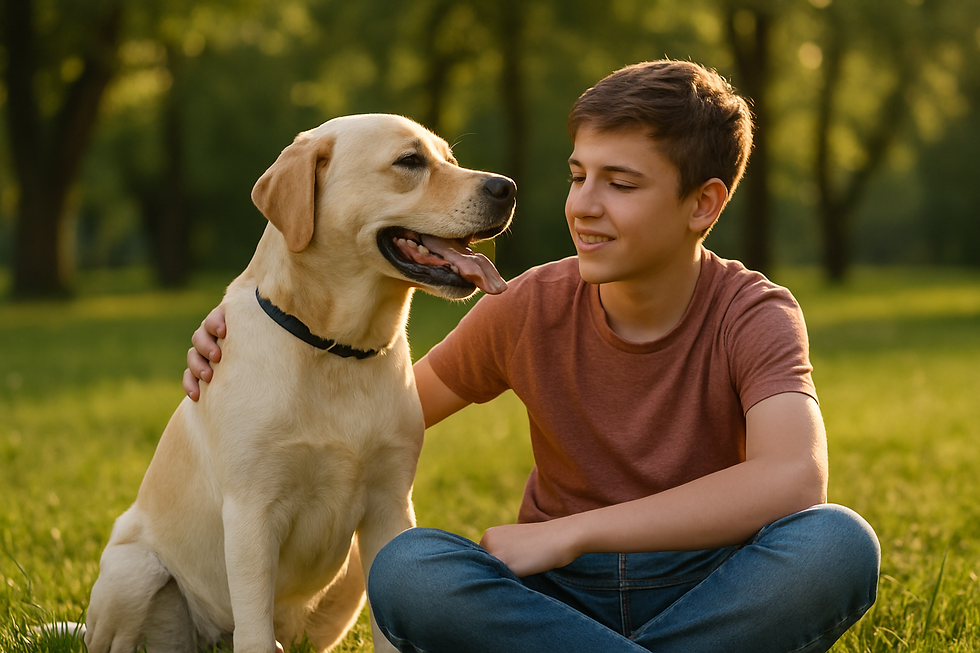
K9 4 KIDS integrates animal rehabilitation with rigorous youth mentorship. A stressed adolescent understands the panic of a reactive shelter dog perfectly. Both populations face societal misunderstandings. Both groups experience severe emotional trigger stacking daily. Our structured programs bridge this critical gap. You empower local teenagers when you support this dual-purpose mission. Learn about enrollment and participation at https://www.k94kids.org/our-programs/challenged-youth.
Psychological Mirroring In Youth And Canine Rehabilitation
At-risk adolescents relate deeply to misunderstood shelter dogs. The youth recognize their own defensive behaviors reflected in the animals. Frontiers in Veterinary Science published compelling data on this dynamic. Training under-socialized shelter dogs increases emotional attachment and social-cognitive growth in incarcerated youth. Review the study at https://www.frontiersin.org/journals/veterinary-science/articles/10.3389/fvets.2018.00302/full. The teenagers learn patience and emotional regulation by observing the dogs. A teenager understands they must remain calm to help the dog feel safe. This mirroring effect accelerates the rehabilitation timeline for both parties.
Building Future Orientation Through Animal-Assisted Intervention
Animal-assisted interventions provide powerful additions to standard mental health treatments. PLOS One research confirms canine-assisted interventions reduce trauma symptoms and disruptive behaviors in adolescents. Read the clinical findings at https://journals.plos.org/plosone/article?id=10.1371/journal.pone.0210761. The K9 4 KIDS program builds empathy and future orientation. Mentorship metrics show increased graduation rates for participating students. The responsibility of caring for a living creature shifts their worldview. The dogs rely entirely on their designated youth handlers. This dependency fosters profound accountability. The teenagers learn highly technical animal handling skills. The shelter dogs become safe companions ready for adoption. South County residents play a vital role in funding these life-saving interactions. Your involvement ensures both the youth and the dogs receive the guidance they desperately need.


Comments