
Dogs as Social Catalysts: How They Help Troubled Teens Develop Social Skills
- Robert Yurosko

- Aug 1, 2025
- 6 min read
The Power of Paws: Why Dogs and Troubled Teens Are a Natural Match
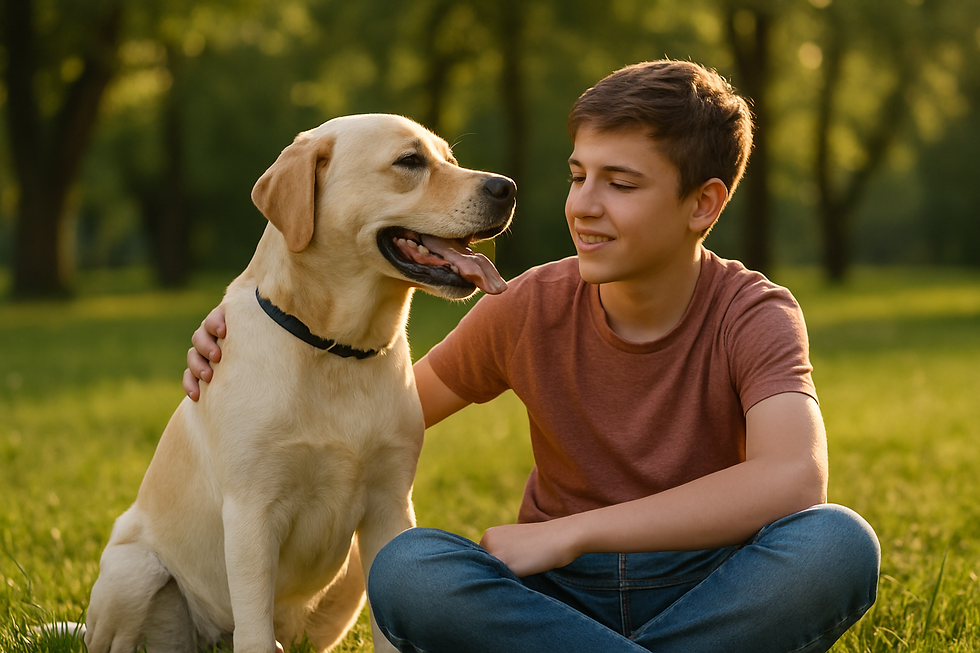
When troubled teens face emotional trauma, anxiety, or isolation, words often fail. That’s where dogs come in. Dogs as Social Catalysts: They don’t need explanations. They don’t ask questions. They simply show up with steady presence and unconditional acceptance. For teens struggling to connect with peers or adults, dogs become safe companions who help break down emotional barriers.
Research from the National Institutes of Health shows therapy dogs reduce cortisol, increase oxytocin, and improve feelings of connection in youth. K9 4 KIDS builds on this science by offering hands-on dog rescue and training experiences designed to help at-risk teens grow socially and emotionally.
To learn more about how the organization began, visit About K9 4 KIDS.
Understanding Social Isolation in Troubled Teens
The Root Causes of Withdrawal and Disconnection
Troubled teens often withdraw because they don't feel safe. The reasons vary. Some struggle with mental health. Others come from homes marked by instability, loss, or neglect. Many have experienced bullying or school failure. Whatever the reason, the outcome is often the same. Teens shut down, stop trusting, and lose confidence in social spaces.
The CDC’s Youth Risk Behavior Data shows that one in three teens reports persistent sadness or hopelessness. This emotional weight affects how they relate to the world and others around them.
Why Traditional Therapy Often Falls Short
Talk therapy can be powerful, but it doesn't work for everyone. Some teens feel exposed or judged when asked to sit in a room and talk about their feelings. Others simply don’t have the words to describe what’s going on inside. That’s why programs like K9 4 KIDS offer a different approach. Dogs create a nonverbal bridge to connection. Teens can relax, build trust, and begin to engage socially at a pace that feels natural.
Dogs as Social Catalysts: What the Science Tells Us
Biological and Emotional Pathways: Oxytocin, Cortisol, and Calm
Dogs help calm the body as well as the mind. When teens pet or interact with dogs, their brains release oxytocin, which builds trust and emotional safety. At the same time, stress hormone levels drop. This combination makes it easier for teens to feel safe enough to connect with others.
A recent Frontiers in Psychology study showed that animal-assisted therapy reduces physiological signs of stress and increases prosocial behavior, especially in teens with social anxiety.
Improved Communication and Social Risk-Taking
Once stress is lowered, teens are more likely to talk, make eye contact, and initiate interactions. Therapy dogs act like social glue. They attract attention and encourage teens to talk about them, share stories, or even give commands. That’s where the magic happens. What starts as a conversation about a dog turns into a conversation with peers, staff, and eventually family members.
Learn more about this process at K9 4 KIDS’ Challenged Youth Program.
Real-World Results: Stories from the Field
K9 4 KIDS’ South Bay Impact
In San Martin and surrounding South Bay communities, K9 4 KIDS has helped hundreds of teens reclaim confidence and build lasting social skills. The organization partners rescued dogs with teens who learn to care for, train, and advocate for their animals. Along the way, they begin to advocate for themselves.
Through structured routines and one-on-one dog handling, teens start developing responsibility, empathy, and patience. These traits transfer directly to classroom and peer interactions.
Explore more success stories through the Big Dog Rescue Program.
Success Spotlight: When Rescue Dogs Rescue Teens
One teen arrived at the program unwilling to speak to anyone. He had been through multiple school suspensions and refused traditional counseling. Within two weeks of working with a shy lab mix named Benny, something shifted. He began showing up early, smiling, and even introducing Benny to volunteers. By the end of the program, he had spoken in front of a small group about his experience.
Stories like these aren't rare. They are the heart of the work at K9 4 KIDS.
Read more case studies from sources like Sedona Sky Academy and HABRI.
From Pet to Partner: How Teens Learn Vital Life Skills
Building Empathy, Routine, and Responsibility
Teens in these programs learn how to feed, groom, train, and care for their assigned dogs. At first, it’s about following instructions. But over time, they begin to anticipate the dog’s needs, take initiative, and even mentor others.
These habits build a sense of pride. They also teach time management, task completion, and patience—core skills that help teens reintegrate into school, work, and family life.
Nonverbal Communication and Emotional Intelligence
Dogs can’t talk, but they communicate volumes through body language. Teens learn to read those cues. A lowered tail means fear. A lick to the hand can signal affection. Interpreting a dog’s emotions builds the same muscle that helps teens read human cues like tone, posture, or facial expressions.
This is the foundation of emotional intelligence. And it's something many teens in trauma or neurodivergent conditions struggle to learn in other settings.
The RSPCA offers similar training tools for youth working with dogs.
Why Animal-Assisted Therapy Outperforms Traditional
Models
Comparing Outcomes: Data-Driven Evidence
Recent studies from HABRI show that youth participating in dog-assisted therapy experience up to 84 percent improvement in social engagement. Compared to teens in traditional group therapy, those in canine-based programs report lower anxiety, better mood, and increased confidence.
Teens say they feel "less judged" and "more relaxed" around dogs than they do in classroom or clinic settings. These perceptions matter. They make the difference between shutdown and breakthrough.
Local Community Impact in San Martin and Beyond
K9 4 KIDS is more than a program. It is a community fixture. Based in San Martin, it serves teens from South Bay to San Benito County and beyond. Through partnerships with schools, juvenile probation officers, and local families, the organization gives both dogs and teens a second chance at connection.
See how the program works at the K9 4 KIDS Homepage.
Getting Involved: How You Can Help Bridge the Gap

Volunteer, Donate, or Refer a Teen in Need
You don’t have to be a therapist to help. Whether you’re a dog lover, a teacher, a parent, or someone who wants to make a difference, K9 4 KIDS offers opportunities to get involved. Volunteers help with walks, training, transportation, and event support. Donations help cover food, veterinary care, and training supplies.
If you know a teen who could benefit, refer them through the K9 4 KIDS Contact Page.
Why Supporting Rescue-Based Youth Programs Matters
Each dog saved through this program changes more than one life. The dogs find homes. The teens find purpose. The community gains strength. Programs like this fill a critical gap in youth services by combining empathy, structure, and purpose in a way that truly works.
Your support brings healing full circle.
Frequently Asked Questions (FAQ)
How do therapy dogs help troubled teens?
Therapy dogs lower stress and anxiety levels, creating a safe emotional space for teens. This helps them open up, engage, and begin to rebuild trust with others.
Can dogs improve social skills in youth?
Yes. Studies show that working with dogs improves communication, empathy, and social interaction in teens, especially those who are socially withdrawn or neurodivergent.
What are the benefits of dog therapy for teens?
Benefits include lower anxiety, increased self-confidence, improved emotional regulation, and stronger peer relationships. Teens also learn responsibility and gain a sense of purpose.
Are therapy dogs effective for youth with behavioral issues?
Very. Many teens with behavioral challenges respond more positively to animal-assisted programs than traditional talk therapy because dogs offer nonjudgmental companionship.
How can I enroll my teen in a program like K9 4 KIDS?
Visit the Challenged Youth Program page to learn more about enrollment steps, eligibility, and upcoming program dates.
Conclusion
Troubled teens don’t need more lectures. They need connection, trust, and a reason to show up. Dogs provide that. Programs like K9 4 KIDS use these relationships to build a bridge toward stronger social skills, greater confidence, and lasting emotional growth.
If you're ready to make a difference for a teen, a dog, or an entire community, K9 4 KIDS is here and ready to welcome you.


Comments