
Why Do Big Dogs Cost More to Rescue, Train, and Rehome?


Before You Donate to a Local Dog Rescue, Understand the Big Dog Problem
Before you donate to local dog rescue work, you should know what your gift supports. Big dogs cost more to rescue because responsible care takes more space, more handling, more cleaning, more training time, and a longer adoption path.
K9 4 KIDS works from San Martin and serves South County, the South Bay, Morgan Hill, Gilroy, and nearby San Benito County communities. The organization is not only feeding dogs. It is helping large rescue dogs move from stress, confusion, and shelter behavior into safer adoption readiness.
You will see this difference at the kennel level. A large dog needs controlled movement through gates, calm exits from the kennel, safe washing, strong sanitation routines, daily enrichment, leash handling, and repetition. The dog also needs the right home, not the fastest home.
Learn more about the local nonprofit mission through K9 4 KIDS.
Why Big Dogs Cost More Than Small Dogs
Space, Strength, and Time Change the Rescue Math
A big dog needs more room to decompress. The kennel has to support safe movement, clean bedding, water access, and room to rest without constant stimulation. That matters because stress shows up in behavior. A dog pacing in a tight run, barking at every passerby, or exploding through a gate is harder to place.
The care routine also changes. Larger dogs eat more, create more waste, need stronger leash equipment, and require safer handling during transfers, washing, and vet visits. Staff and volunteers need clean routines: leash clipped first, body position controlled at thresholds, dog moved with low arousal, then returned calmly.
The industry data backs up the pressure. Shelter Animals Count reported large dog adoptions declined 9% in the first half of 2025, while small dog adoptions increased 6%. That means large dogs were moving out more slowly.
Longer Stays Multiply Every Cost
A longer stay does not create one extra cost. It repeats every cost. Every extra day means food, water, cleaning, laundry, waste handling, enrichment, training, behavior notes, and kennel maintenance.
ASPCA reported 5.8 million dogs and cats entered U.S. shelters and rescues in 2025, and 4.2 million were adopted. Those national numbers show a system moving many animals, while still carrying major capacity pressure. AVMA also reported large dogs spend 70% more time in shelters than small dogs, based on 2026 shelter adoption reporting.
For a small rescue, that time matters. A kennel space occupied for three months is a kennel space unavailable for another dog. A large dog who needs behavior work also needs consistency. Missed routines and rushed handling set dogs back. Good rescue work pays for the time needed to avoid those setbacks.
Where Dog Rescue Donations Go
Kennel Care Starts With Clean, Controlled Daily Work
When people ask where dog rescue donations go, the honest answer is daily care.
A big dog kennel has to stay clean, dry, and predictable. Floors need regular sanitation. Bowls need washing. Bedding needs rotation. Waste has to be removed fast enough to protect skin, paws, smell control, and stress levels. Dogs need safe water access, clean feeding routines, and enrichment without creating overstimulation.
Washing is adoption readiness too. A big dog who resists bathing, panics at water, or fights towel handling needs low-arousal exposure. That means short sessions, calm touch, stable footing, controlled water pressure, and release before the dog overloads. The goal is safe handling.
K9 4 KIDS explains its Big Dog Rescue work as rescuing, rehabilitating, and rehoming large breed dogs. That type of work depends on repeatable daily systems, not one-time rescue moments.
Medical and Adoption Preparation Add More Layers
Donation money also supports the parts of rescue most adopters never see. Dogs need wellness checks, vaccines, parasite prevention, spay or neuter planning, microchip records, transport, and follow-up. A rescue also has to document behavior, monitor changes, and define the right home.
Adoption readiness is not the same as being alive and fed. A dog should be clean enough to meet people, calm enough to exit the kennel, safe enough to handle, and stable enough to show real personality during a visit. That takes work before an adopter ever arrives.
For a large dog, the adoption match also needs more care. Size, leash strength, other pets, children, fencing, rental rules, and owner experience all matter. Good placement protects the dog and the family.
Why Training Takes Longer for Large Rescue Dogs
Adoption Readiness Is Built Through Small Repetitions
Large rescue dogs do not become safer through one command. They become safer through small, repeated patterns.
A handler works calm kennel exits first. The leash goes on before the door opens. The dog waits. The handler controls the threshold. The dog moves out without blasting through the opening. That simple routine affects every future handoff, walk, vet visit, wash, and adoption meeting.
Loose-leash handling follows the same logic. The dog learns leash pressure and release, not pulling against pressure until both dog and handler get frustrated. The handler rewards slack, changes direction early, and keeps the session short enough to end well.
Other adoption-readiness routines matter too: sit, wait, release patterns, neutral passing around other dogs, polite food-taking, crate decompression, low-arousal washing, and calm recovery after stimulation. These are not tricks. These are safety behaviors.
The work is slower with a big dog because mistakes carry force. A sixty-pound dog jumping at a gate is different from a ten-pound dog doing the same thing.
The 3-3-3 Guideline Helps Set Expectations
Many rescues use the 3-3-3 guideline to help adopters understand adjustment after adoption. The first three days often focus on decompression. The first three weeks focus on routine and adjustment. The first three months focus on trust and settling into the home.
This is not medical science. It is a rescue-world expectation tool.
A large rescue dog needs time to learn the new home rhythm. Too much freedom too fast creates problems. Too many visitors, dog parks, car rides, and introductions in the first week overwhelm many dogs. Structure is kinder. A simple routine, a safe crate or quiet area, controlled leash walks, calm feeding, and predictable rules help the dog settle.
Training before adoption makes this easier. A dog who already understands thresholds, leash pressure, crate rest, food manners, and calm handling has a better base. The adopter still has work to do, but they are not starting from chaos.
Why Local Rescue Donations Feel More Traceable
Small Rescues and National Charities Serve Different Roles
National animal charities have scale. They fund broad campaigns, disaster response, advocacy, national shelter data, and public education. That work has value.
A small rescue does something different. It makes the impact easier to see. When you support a local dog rescue nonprofit in San Martin, the gift stays closer to the dog, the kennel, the handler, the youth participant, and the adopter. You are not guessing where the need lives. It is nearby.
That is the key difference between national reach and local traceability. A national organization might support thousands of animals through large systems. A small rescue might spend weeks helping one large dog stop lunging at a gate, tolerate a bath, walk with a loose leash, and meet a family without panic.
K9 4 KIDS describes its Our Mission work around rescue dog rehabilitation and youth support in San Martin. That local focus gives donors a clearer path from gift to outcome.
South County Shelter Pressure Makes Local Help Matter
San Martin sits in a real animal-care corridor. County of Santa Clara Animal Services says it provides all services to unincorporated Santa Clara County and sheltering services to Morgan Hill, Gilroy, and Sunnyvale. That places South County, Morgan Hill, and Gilroy directly inside the regional shelter conversation.
Small rescues help by giving specific dogs more time and structure than crowded systems often have available. This is especially important for big dogs, because big dogs need longer behavior runways and better matching.
San Benito County and Hollister families face similar concerns around adoptable dogs, housing fit, transport, and support after placement. A San Martin rescue is close enough to serve both sides of that local need.
If you want to support the work, ask questions, or discuss adoption, volunteering, or program support, use the Contact Us page.
How Youth-Canine Work Supports Dogs and Young People
Structure Helps Both Sides
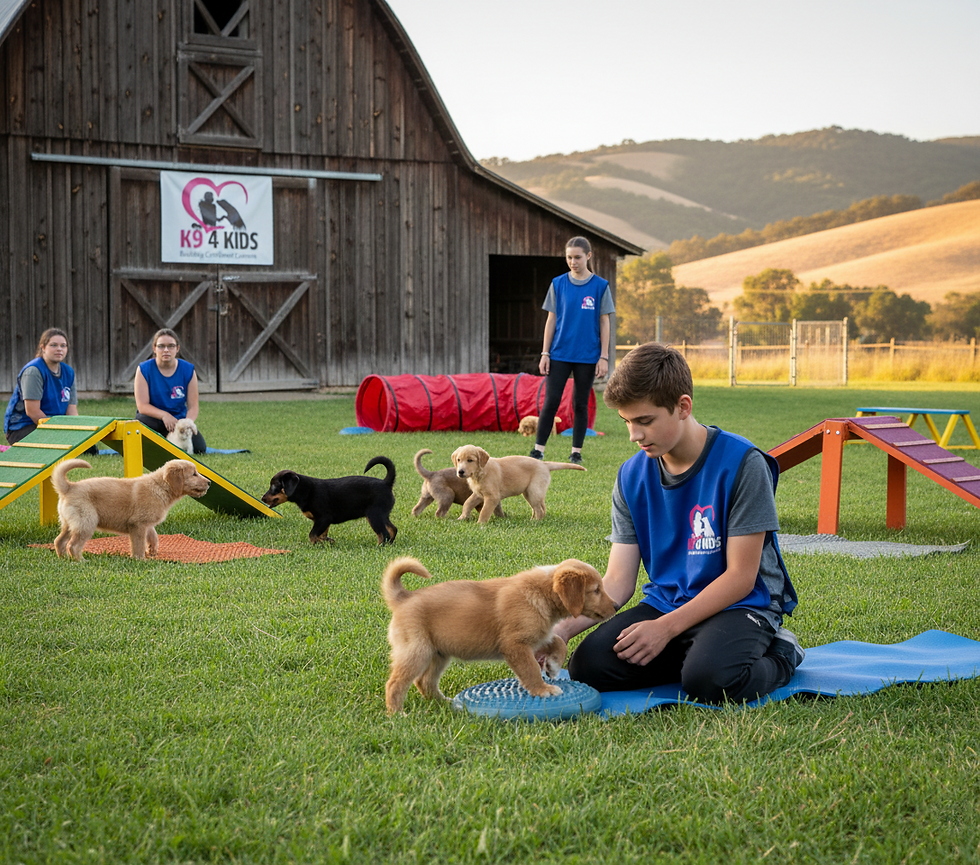
K9 4 KIDS adds a second layer to the rescue model. The dog needs structure. The youth participant needs structure. When supervised well, the work supports both.
A youth participant does not need to overpower a dog. They need to learn timing, patience, calm body language, and follow-through. The dog learns a cleaner human pattern. The youth learns responsibility through a task with immediate feedback.
This includes feeding routines, water checks, grooming support, controlled leash walks, kennel cleaning, basic obedience, and safe play. Adult supervision sets the plan, controls the dog, protects the youth, and teaches each step.
The K9 4 KIDS Youth Programs page describes support for youth through rescue dog care, training, grooming, and a safe environment. The value is practical. Youth learn calm leadership through work, not speeches.
Research Supports Structured Animal-Assisted Programs
Animal-assisted youth programs should never be sold as a magic fix. They are structured support programs. The research is strongest when programs have supervision, repetition, defined tasks, and clear safety rules.
A PubMed Central study of animal-assisted therapy for incarcerated youth used dog training one hour, twice weekly, for 10 weeks, with goals tied to empathy and behavior. That matters because the structure is measurable. The youth showed up, handled tasks, worked with a dog, and practiced responsibility.
For K9 4 KIDS, the local version is mission-driven and practical. A big dog receives human interaction, handling practice, grooming exposure, and training repetition. A young person receives responsibility, boundaries, patience, and a role with purpose.
The overlap matters. The dog needs calm repetition. The youth needs meaningful repetition. The same supervised session supports both.
Frequently Asked Questions
Is it better to donate to a local rescue or a national animal charity?
Both have value. National charities support broad rescue, advocacy, disaster response, and public education. Local rescues give donors a closer look at daily impact. A local gift often supports food, kennel care, washing, training, adoption preparation, and youth programming in the same community.
What does a small dog rescue use donations for?
Donations often support food, water bowls, bedding, kennel sanitation, vaccines, spay or neuter costs, microchips, grooming supplies, laundry, transport, training tools, enrichment, and adoption support. For big dogs, those needs usually cost more because the dog needs more space, stronger handling routines, and more time.
Why do large rescue dogs need more support?
Large rescue dogs often face slower adoption, rental restrictions, breed or weight limits, leash-strength concerns, and longer behavior adjustment. They also need safe kennel exits, loose-leash handling, threshold control, washing tolerance, decompression routines, and better adopter matching before placement.
Do rescue dog programs help challenged youth?
Structured rescue dog programs support responsibility, patience, communication, empathy, and calm leadership when adult supervision is strong. Youth learn through feeding, grooming, walking, training practice, and safe handling. The dog benefits from consistent interaction and calm repetition.
Does donating locally help reduce shelter pressure?
Yes. Local rescues help by taking dogs who need more time, space, washing, training, or adoption matching. This supports the local shelter pipeline and gives overlooked dogs a stronger path toward a stable home.


Comments